Supply Chain Strategy2026-03-2210 min read
White Label vs. Full Customization: Why Ready-to-Ship is the Winning Move for New Brands
Paul PengFactory Technology Director
Part of the Manufacturing Solutions series
Part of the Manufacturing Solutions series
Business insights for apparel brand owners, from production strategies to manufacturing optimization
Services and solutions for your business
Turn our ready stock into YOUR branded product. Choose styles, send your logo, and receive fully branded underwear in 7 days.
Learn MoreMen's and women's underwear ready to dispatch. Choose from 6 fabric series. Add your brand label in 7 days.
Learn More
Buyers read MOQ as a quality signal — '100 pieces must mean a garage operation; 5,000 pieces must mean a serious factory.' Both inferences are wrong. MOQ is regional production economics, not craftsmanship: Vietnam's full-package giants state 5,000-10,000 pieces per style (Thygesen's published rate), Bangladesh export lines run 1,000-5,000, and the wider industry asks 2,000+ — while China's Pearl River Delta clusters hold ready-stock fabric and mixed small-batch lines that make 100-piece private label ($1.00-1.50/piece) and 500-piece-per-color OEM ($1.50-3.00/piece) commercially real. This guide breaks down the line economics behind each number, what 'low MOQ' actually costs you in trade-offs, and the 100 → 500 test-and-scale ladder for underwear brands.

'Which country is best for apparel manufacturing?' costs brands money every time it gets asked — because the answer is a function of three variables, not one: your order stage, your category, and your destination market. Change any one and the correct country flips. This framework walks the three stages (100-piece private-label tests, 500-piece-per-color OEM scaling, 2,000+/10,000+ mass replenishment), maps categories to countries (underwear and fit-driven knits vs. cotton basics vs. performance synthetics), prices in the 2025 tariff reality (US-bound: 20% Vietnam / 20% Bangladesh / ≈45-55% China; RCEP markets: 0% on Chinese origin), and shows why 80%+ of US fashion companies now run dual-country sourcing instead of picking one winner.
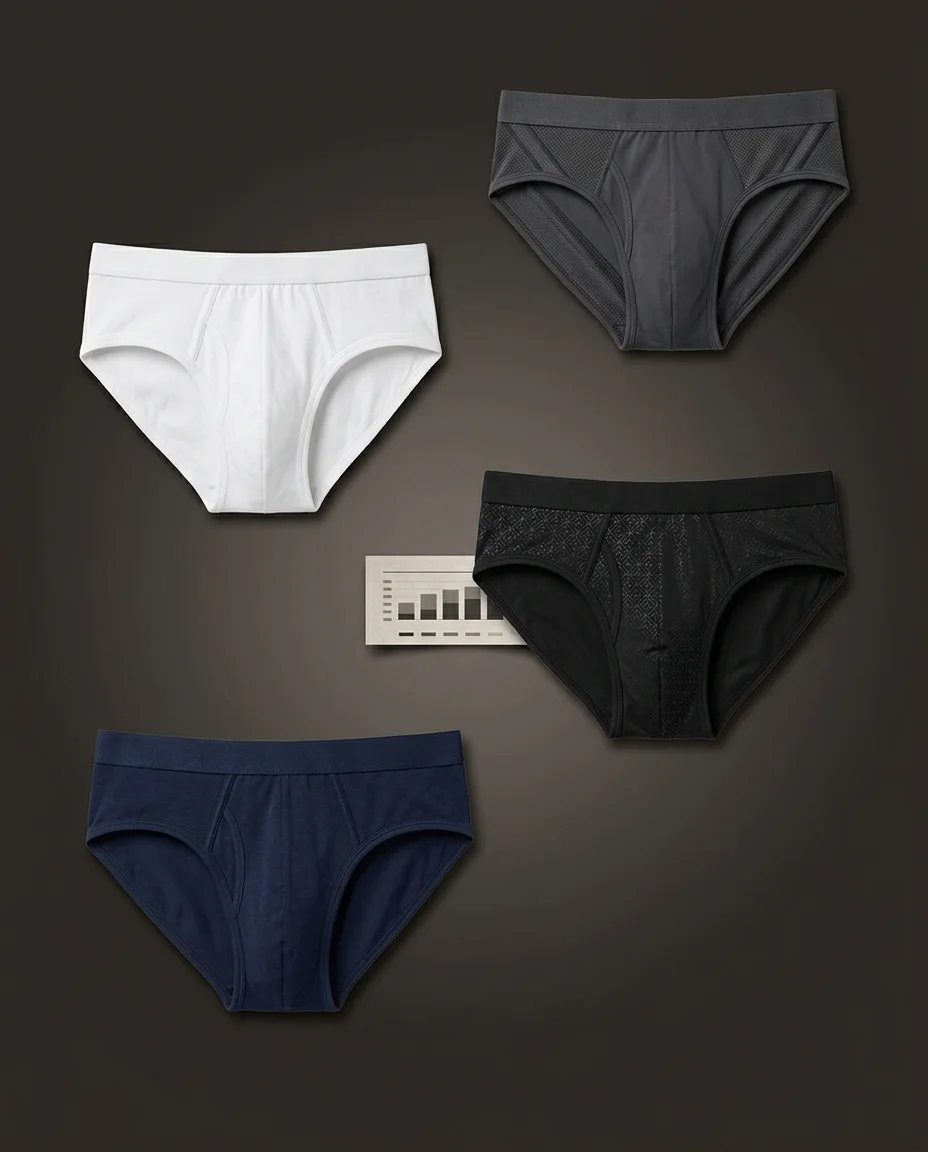
The men's underwear market split from one 'basics' category into four function-specific tracks — and the biggest entry filter is no longer design skill, it's MOQ arithmetic. This decision guide compares the four tracks (budget basics, functional tech, premium fabric, performance sport) with 2026 search data, per-track technology requirements and entry costs — and shows how a two-step sourcing ladder (test at 100 pieces ready-stock private label, scale at 500 pieces full OEM/ODM, vs the industry's 2,000+ norm) changes which track a new brand can actually afford to enter.
Sarah had a vision: a sustainable underwear brand made from premium Regenerated Cellulose fabrics for eco-conscious millennials. She spent $4,500 on tech pack designs, invested $2,000 in fabric development, and committed $8,500 for a 1,000-unit first production run.
Total investment: $15,000. Timeline: 18 weeks.
Six months after launch, Sarah had sold 87 units. She discovered too late that her target customers preferred different cuts and weren't willing to pay premium prices for an unproven brand. Today, she's sitting on $12,000 worth of unsold inventory and questioning whether entrepreneurship was the right choice.
Across the country, James took a different approach. He invested $2,500 in white label underwear from a manufacturer's catalog, added his branding, and launched in 3 weeks. Within 8 weeks, he identified his best-selling styles. Six months later, he's investing in custom development for his proven winners—generating $45,000 in revenue with minimal risk.
Both had similar ambitions. Both had similar target markets. One chose the path of traditional manufacturing, the other chose speed and validation. The difference? One bet everything on uncertainty. The other validated before scaling.
This article will show you why smart startups begin with white label and ready-to-ship solutions—and how this strategy can be the difference between building a sustainable brand and becoming another startup casualty.
Loading video...
Before diving into strategy, let's establish what we're talking about. These terms are often confused, but they represent fundamentally different approaches to bringing your brand to market.
What it is: You purchase pre-designed products from a manufacturer and apply your own branding (labels, tags, packaging). The product design belongs to the manufacturer, but the brand identity is yours.
How it works:
Key characteristic: Speed and market testing with minimal investment.
What it is: Similar to white label, but with more customization options. You select from the manufacturer's designs but can modify colors, fabrics, waistbands, and other details to better align with your brand.
How it works:
Key characteristic: Balance of customization and speed.
What it is: You create completely original products from scratch. You provide detailed designs, specifications, and requirements. The manufacturer produces exactly what you've designed.
How it works:
Key characteristic: Complete creative control, but high risk and substantial upfront investment.
Here's the uncomfortable truth about the underwear industry: Most manufacturing advice is written for established brands, not startups.
Traditional manufacturing models assume you have:
Most new brand founders have none of these. Yet they follow traditional paths—and the results are predictable.
Traditional manufacturing creates three deadly risks for new brands:
1. Capital Lock: $10,000-15,000 tied up in unproven products 2. Timeline Drag: 18+ weeks before first dollar of revenue 3. Inventory Risk: 1,000 units of products customers may not want
Result: 73% of apparel startups run out of cash before finding product-market fit.
As a professional apparel manufacturer, we've seen hundreds of brand launches. The most successful founders don't start with "perfect custom products." They start with market validation, iterate based on real customer data, and scale into custom manufacturing once they understand what their customers actually want.
White label isn't a compromise—it's a strategic choice that aligns with how modern brands actually succeed. Here's why.
| Approach | Timeline to Launch | Time to First Revenue |
|---|---|---|
| White Label | 2-4 weeks | Week 3 |
| Private Label | 6-10 weeks | Week 8 |
| Full Custom (OEM) | 11-19 weeks | Week 16+ |
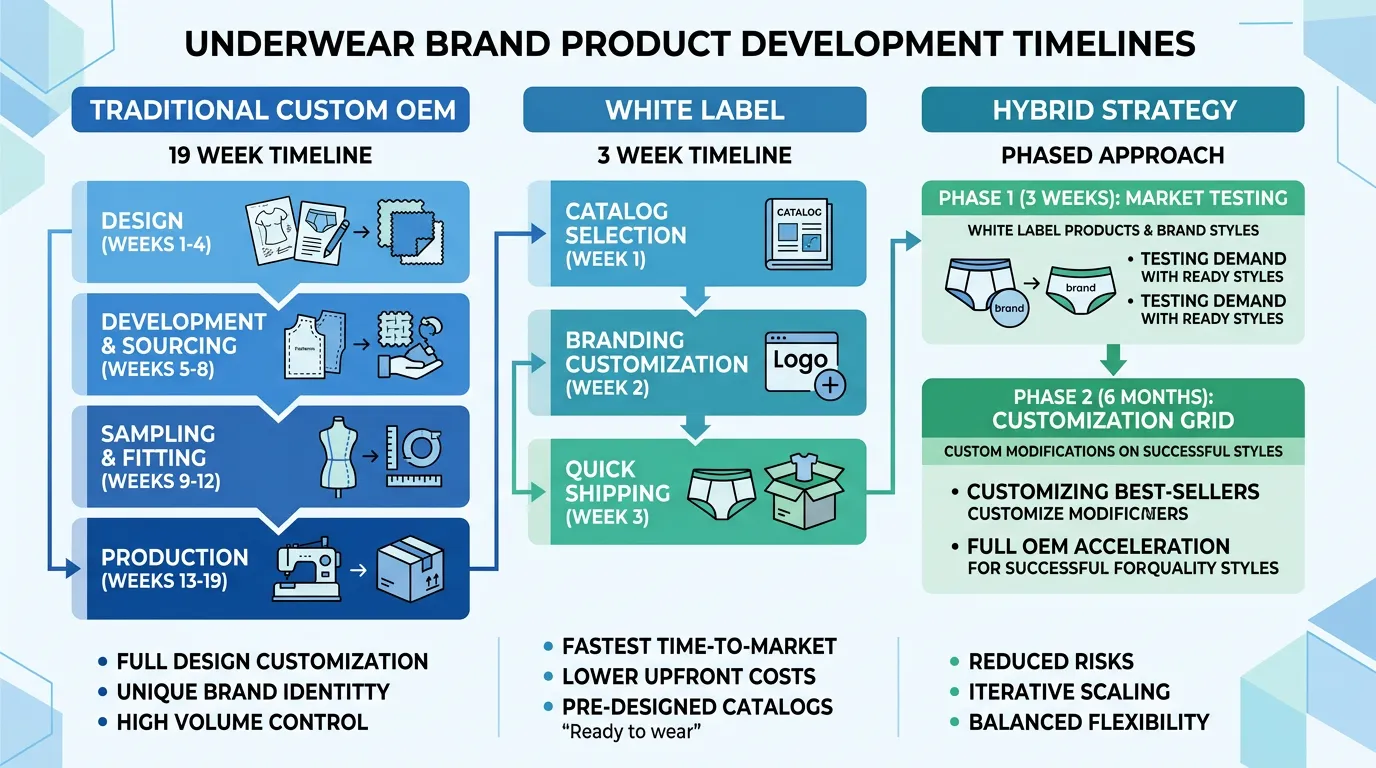
Why speed matters:
White Label Investment Structure:
Full Custom Investment Structure:
Launch 5 different white label styles for the same cost as developing 1 custom product. Discover what your customers actually want through real purchase data.
Keep 70% of your startup budget available for marketing, branding, and iteration—the activities that actually drive brand growth.
When a style underperforms, you're out $300-600, not $3,000-6,000. Pivot quickly based on market feedback instead of doubling down on mistakes.
Generate revenue from week 3 instead of week 16. Use early sales to fund custom development of proven winners instead of draining savings.
White label products from established manufacturers benefit from:
You're not compromising on quality—you're leveraging the manufacturer's expertise and R&D investment.
Let's break down the actual costs for a hypothetical underwear brand launching with 3 styles.
| Cost Item | Amount |
|---|---|
| Tech pack design (3 styles) | $1,500-3,000 |
| Fabric sourcing & development | $800-1,500 |
| Sampling iterations (3 rounds × 3 styles) | $1,200-2,500 |
| Production (500 units × 3 styles) | $6,000-9,000 |
| Total | $9,500-16,000 |
| Timeline | 16-20 weeks |
| Cost Item | Amount |
|---|---|
| Branding & packaging design | $300-800 |
| White label samples (10 styles to test) | $200-400 |
| Initial production (100 units × 3 proven styles) | $900-1,350 |
| Total | $1,400-2,550 |
| Timeline | 3-4 weeks |
The difference: Scenario B saves $6,950-14,600 and launches 13-16 weeks faster—with more data about what customers actually want.
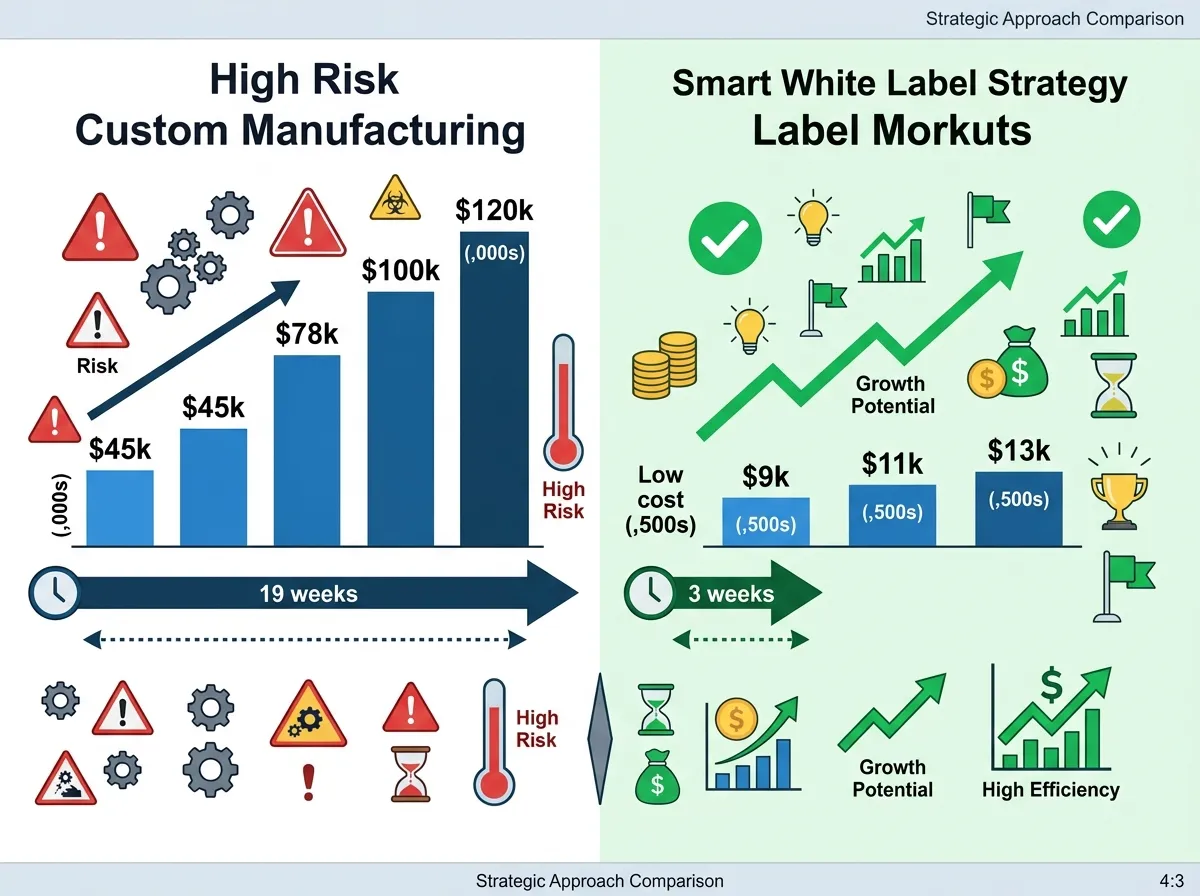
The most successful brands don't choose one approach permanently—they evolve their manufacturing strategy as they grow.
Action: Launch 5-8 white label styles
Investment: $2,000-4,000 Learning: Data-driven insights, not guesses
Action: Transition winners to private label
Investment: $3,000-6,000 Result: Differentiated products with proven demand
Action: Create signature custom products
Investment: $5,000-10,000 Outcome: Unique brand with validated market position
Total timeline: 12 months to sustainable brand Total investment: $10,000-20,000 (spread over time, funded by early sales) Risk: Minimized through iterative validation
This phased approach lets you build brand equity through iteration instead of betting everything on uncertain outcomes. You preserve capital, reduce risk, and make data-driven decisions at every stage.
At AuraTouchGlobal, we've designed our manufacturing capabilities specifically for brands following this strategic approach. Here's how we support new brands at every stage.
Unlike traditional manufacturers demanding 500-1,000 unit minimums, our Starter Program offers:
Why this matters: You're never forced to order more inventory than you need—protecting your cash flow and storage capacity.
Traditional manufacturers take 3-5 weeks per sample iteration. We deliver prototypes in 3-7 days because:
Result: Test concepts and iterate 5x faster than traditional timelines.
Have a photo of a style you want to recreate? We support:
Benefit: Launch with professional designs without hiring technical designers or creating complex tech packs.
While our facility does not currently hold OEKO-TEX or BSCI certifications, we provide robust quality assurance through:
We've found that third-party testing for specific orders provides more flexible and targeted quality assurance than blanket certifications. We can test exactly what matters for your target market and specific product requirements—whether that's color fastness for European markets or fabric composition for US regulations.
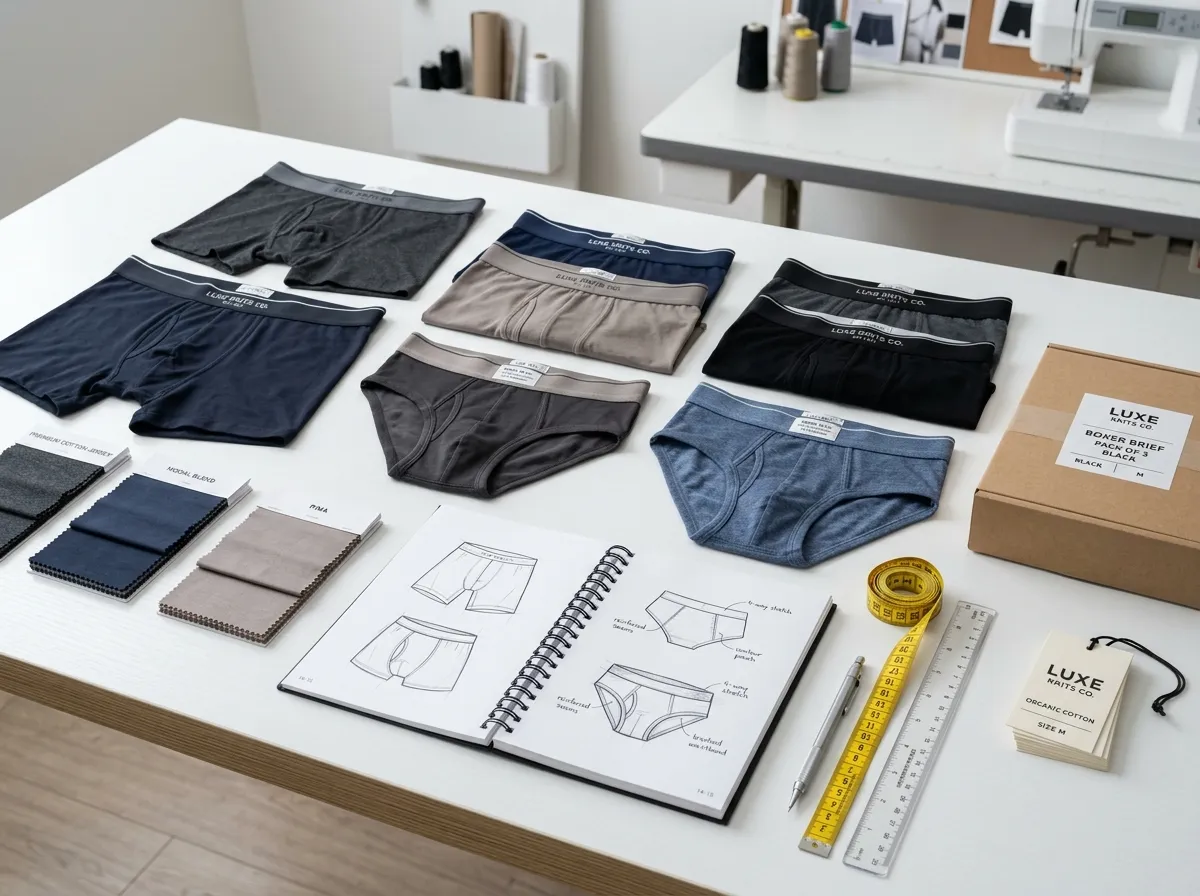
Starting point: Lifestyle influencer with 150K followers, no manufacturing experience
Strategy:
Results: $127,000 in Year 1 revenue, 68% gross margins, zero unsold inventory
Starting point: Two co-founders, strong sustainability mission, limited capital
Strategy:
Results: $89,000 in Year 1 revenue, 40% repeat customer rate, featured in sustainability publications
Starting point: Fitness professional targeting athletes, no technical design background
Strategy:
Results: $165,000 in Year 1 revenue, 52% conversion rate on email list, expanded to retail partnerships
Not sure where to start? Answer these questions to determine your optimal strategy.
| Budget Range | Recommended Approach |
|---|---|
| Under $5,000 | White label only—test 5-8 styles |
| $5,000-10,000 | White label → Private label hybrid |
| $10,000-20,000 | Phased approach: White label → Private label → OEM |
| $20,000+ | Strategic hybrid with accelerated timeline |
No data yet → Start with white label to gather insights Some initial feedback → Private label to refine proven concepts Strong sales data → Consider OEM for signature products
| Timeline | Approach |
|---|---|
| 2-4 weeks to launch | White label |
| 6-10 weeks to launch | Private label |
| 12+ weeks to launch | OEM |
Consider: Can your brand afford to wait 16+ weeks before generating revenue? Most startups cannot.
Speed critical → White label for immediate market entry Balance needed → Private label for moderate customization Uniqueness essential → OEM for proprietary products
Strategic insight: Most customers cannot distinguish between white label, private label, and custom products. Branding, marketing, and customer experience typically matter more than product origin for new brands.
Use our cost framework to compare white label vs. custom manufacturing for your specific situation. Most founders discover they can test 5+ styles with white label for less than the cost of developing one custom style. Contact us for a free manufacturing consultation — we'll map out the most capital-efficient path for your product category and target market.
The evidence is clear: White label and ready-to-ship solutions offer new brands the fastest, lowest-risk path to market validation.
Consider the strategic advantages:
Most importantly, white label isn't a permanent compromise—it's a strategic starting point. The most successful brands begin with ready-to-ship products, learn what customers actually want, and scale into custom manufacturing for proven winners.
This isn't about settling for less. It's about building a sustainable brand through iteration, validation, and data-driven decision-making.
The $15,000 mistake is avoidable. You don't have to bet your entire startup budget on unproven products. You can test multiple styles, gather real customer data, and scale strategically—all while preserving capital for marketing and growth.
Need the full business roadmap? Our complete guide to starting a lingerie business covers legal setup, financial planning, and the 100-unit market testing framework — everything beyond the manufacturing decision.
Our Starter Program is designed specifically for new brands following this strategic approach:
Ready to discover which white label styles will resonate with your target customers?
Contact us for a manufacturing consultation and let's discuss how we can help you launch your underwear brand with minimal risk and maximum speed to market.
Prefer to see our capabilities first? Request a white label sample pack to experience our quality firsthand and explore the styles that could form the foundation of your brand.
The smartest way to build your brand isn't to bet everything on uncertainty. It's to validate, iterate, and scale based on real customer data. Let's start that journey together.
Sources and Further Reading: