Supply Chain Strategy2026-03-2615 min read
How to Start a Lingerie Business in 2026: Costs & Low-MOQ Guide
Paul PengFactory Technology Director
Part of the Manufacturing Solutions series
Part of the Manufacturing Solutions series
Business insights for apparel brand owners, from production strategies to manufacturing optimization
Services and solutions for your business
Turn our ready stock into YOUR branded product. Choose styles, send your logo, and receive fully branded underwear in 7 days.
Learn MoreStart your underwear brand without the risk. Ready stock from 100 pieces, private label from 100 pieces. No large commitments required.
Learn More
Buyers read MOQ as a quality signal — '100 pieces must mean a garage operation; 5,000 pieces must mean a serious factory.' Both inferences are wrong. MOQ is regional production economics, not craftsmanship: Vietnam's full-package giants state 5,000-10,000 pieces per style (Thygesen's published rate), Bangladesh export lines run 1,000-5,000, and the wider industry asks 2,000+ — while China's Pearl River Delta clusters hold ready-stock fabric and mixed small-batch lines that make 100-piece private label ($1.00-1.50/piece) and 500-piece-per-color OEM ($1.50-3.00/piece) commercially real. This guide breaks down the line economics behind each number, what 'low MOQ' actually costs you in trade-offs, and the 100 → 500 test-and-scale ladder for underwear brands.

'Which country is best for apparel manufacturing?' costs brands money every time it gets asked — because the answer is a function of three variables, not one: your order stage, your category, and your destination market. Change any one and the correct country flips. This framework walks the three stages (100-piece private-label tests, 500-piece-per-color OEM scaling, 2,000+/10,000+ mass replenishment), maps categories to countries (underwear and fit-driven knits vs. cotton basics vs. performance synthetics), prices in the 2025 tariff reality (US-bound: 20% Vietnam / 20% Bangladesh / ≈45-55% China; RCEP markets: 0% on Chinese origin), and shows why 80%+ of US fashion companies now run dual-country sourcing instead of picking one winner.
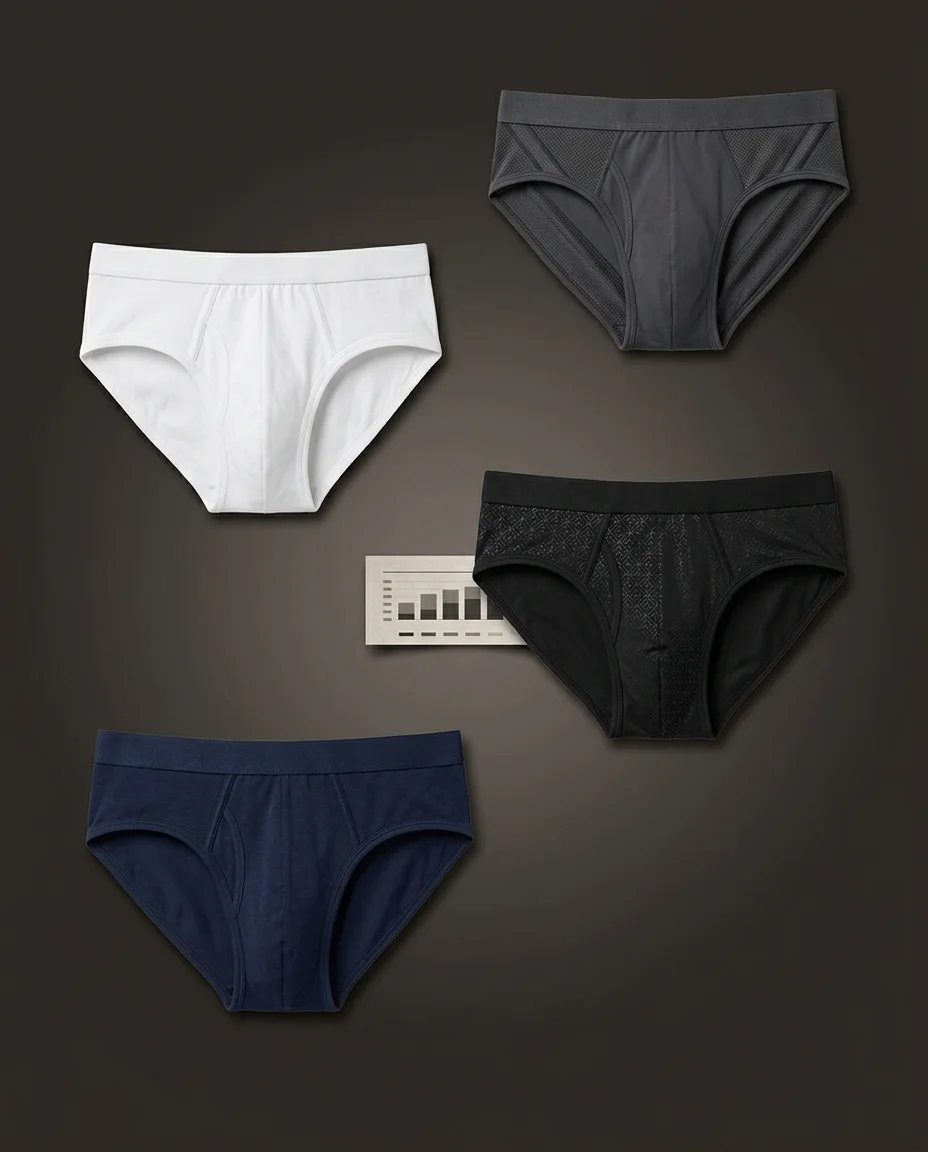
The men's underwear market split from one 'basics' category into four function-specific tracks — and the biggest entry filter is no longer design skill, it's MOQ arithmetic. This decision guide compares the four tracks (budget basics, functional tech, premium fabric, performance sport) with 2026 search data, per-track technology requirements and entry costs — and shows how a two-step sourcing ladder (test at 100 pieces ready-stock private label, scale at 500 pieces full OEM/ODM, vs the industry's 2,000+ norm) changes which track a new brand can actually afford to enter.
Minimum startup cost: $100-150 for a ready-stock private label pack. Time to first sale: 2–4 weeks from order.
You've got the designs. You've found your niche. You know exactly who your customer is. But do you know how to transform that vision into a legitimate, profitable business?
Here's the hard truth: 80% of fashion startups fail not because of bad design, but because of poor business planning. They underestimate startup costs, misjudge market demand, or partner with the wrong manufacturers. The lingerie industry is particularly challenging—intimate apparel requires precise fit, specialized materials, and strict quality control.
This guide fills the gap that most "how to start a brand" articles miss: the business side of building a lingerie company. While our guide to creating your own lingerie brand covers design, materials, and manufacturing from a product perspective, this article focuses on:
After reading this guide, you'll have a complete roadmap from business concept to first sale—without betting your life savings on unproven inventory.
Before you place your first order, you need to decide on your manufacturing tier. This decision determines your inventory investment, time to market, and competitive positioning. Both tiers include everything from the factory side — product, packaging, labels, and any development work — in the FOB unit price. Your only cost is the inventory itself.
Scope note: the MOQs and price ranges in this guide apply to underwear — men's and women's briefs, boxer briefs, and trunks, which is what our factory produces. Bras are a different manufacturing category (different tooling, grading, and MOQ structure) and are quoted separately.
What it is: You select from the manufacturer's proven, ready-to-ship styles and apply your branding — custom labels, hang tags, and packaging. The product design doesn't change, but your brand identity does. This merges what the industry used to split into "white label trial" (unbranded stock) and "private label" (branded stock): at the right factory, both start at the same 100-piece line.
MOQ: 100 units FOB Unit Price: typically $1.00–1.50 (product + your branding included) Inventory Investment: $100–150 Time to Market: 1–2 weeks (label application in as fast as 7 days) Differentiation Level: Low–Medium (your brand on proven products)
Best For:
Pros:
Cons:
Real Example: A D2C founder orders 100 units across 3 best-selling styles with her label applied ($100-150 total), lists them on a basic Shopify store, and tracks which styles and sizes sell best over 4 weeks. After identifying two clear winners, she moves them up to Tier 2 for custom development.
What it is: You customize the product itself — not just the branding. This tier includes two sub-levels depending on how much control you want:
ODM (Partial Customization): Choose from existing base designs and customize materials, colors, fabric compositions, and minor construction details. The manufacturer's patterns serve as your starting point, but you specify the details that matter to your brand.
OEM (Full Customization): Design from scratch. Every element — fit, materials, construction, finishing — is custom to your specifications. Includes tech pack development, sampling, and fit testing. This is for brands with a unique vision that existing designs can't fulfill.
MOQ: 500 units per color (most factories still ask 2,000+ for this level) FOB Unit Price: typically $1.50–3.00 (product + development + custom materials + branding included) Inventory Investment: $750–1,500 Time to Market: 8–16 weeks Differentiation Level: High (unique product)
Best For:
Pros:
Cons:
Real Example (ODM): A growing brand selects 3 base seamless designs from the manufacturer's catalog and customizes each with specific Regenerated Cellulose fabric, a unique color palette, and custom elastic waistbands — creating a differentiated line at moderate development cost.
Real Example (OEM): A luxury lingerie brand develops a fully custom Regenerated Cellulose line with unique gusset construction, custom lace patterns, and proprietary fit technology. Tech pack, sampling, and all development are included in the $3.00/unit FOB price across a 500-unit order ($1,500).
Key Takeaway: Your manufacturing tier should match your business stage. Start with Ready-Stock Private Label (100 units, $1.00-1.50/piece) to validate demand with your brand already on the product. Move to Full Custom OEM/ODM (500 units, $1.50-3.00/piece) once you've proven the market and are ready to differentiate — committing a quarter of the inventory of the industry's 2,000+ runs.
Why the Trial Pack is Your Smartest First Move:
If you're launching your first lingerie brand, the fastest path to revenue isn't custom design — it's testing proven products with minimal risk.
Here's why this approach wins:
✅ Zero design risk: These styles already sell. You're not guessing what works. ✅ Fastest time-to-market: 1–2 weeks from order to selling. ✅ Lowest inventory investment: $100-150 starting. ✅ Focus on marketing: Your energy goes into building your customer base, not reinventing product. ✅ Validate quickly: Test market response before investing in branding or customization.
The Strategy:
Looking for a trial-pack partner? Our Partnership Program offers curated best-selling styles ready to ship. Learn more about our Partnership Program.
Want to evaluate quality first? Request our Startup Sample Pack — includes fabric swatches, digital catalog, finished samples, and our "Lingerie Startup Pitfall Avoidance Guide." Contact us to get yours.
The right OEM underwear manufacturer will offer all three tiers, allowing you to start with a trial pack and scale seamlessly as your business grows. This flexibility is critical — you don't want to switch manufacturers just as you're ready to expand.
Many entrepreneurs skip this step, thinking "I'll handle the legal stuff later." That's a mistake. Your business structure affects your personal liability, tax obligations, and ability to raise capital. Get this right from day one.
Sole Proprietorship:
The simplest structure—you and the business are legally the same. While easy to set up, this exposes your personal assets to business liabilities. Not recommended for product-based businesses, especially intimate apparel where product liability concerns exist.
LLC (Limited Liability Company):
The most common choice for startups. An LLC protects your personal assets from business liabilities and offers flexible taxation options. You can elect to be taxed as a sole proprietorship, partnership, or corporation depending on your financial situation.
Corporation (C-Corp or S-Corp):
More complex and expensive to set up, but necessary if you plan to raise venture capital or have multiple shareholders. S-Corps offer tax advantages for profitable businesses, but have ownership restrictions.
Recommendation: Start with an LLC. It's affordable ($50-500 depending on your state), provides liability protection, and can be converted to a corporation later if you raise capital. Many successful lingerie brands operate as LLCs for years before incorporating.
Trademark Your Brand Name ($250-500):
Before investing in marketing, packaging, and labels, ensure your brand name is protectable. Search the USPTO database (or your country's trademark office) to confirm availability, then file a trademark application. This prevents competitors from using similar names and protects your brand equity.
Copyright Your Original Designs:
While you can't copyright clothing designs broadly, you can protect original graphics, prints, and textile designs. This becomes important if you create unique print patterns or artwork for your lingerie line.
Secure Your Digital Real Estate ($50-100):
Register your domain name and secure matching social media handles before launching. Inconsistency across platforms (e.g., @yourbrand on Instagram but @yourbrand_official on TikTok) confuses customers and weakens brand recognition.
Reality Check: You do NOT need OEKO-Tex, BSCI, or other certifications to start selling lingerie. Many manufacturers claim to have these certifications, but for a startup, they're not required—and claiming certifications you don't actually hold is illegal.
What Actually Matters:
Product Safety Compliance: Your products must meet safety standards for your target market. For intimate apparel, this typically means testing for:
Third-Party Laboratory Testing: Rather than claiming certifications, work with a manufacturer who coordinates third-party testing through accredited labs like SGS, Intertek, or Bureau Veritas. You can request test reports for specific orders to ensure compliance with your market's standards.
Import/Export Documentation: If manufacturing overseas (which most lingerie is), you'll need proper documentation for customs clearance:
Compliance Notice: "Export requirements vary by product category, destination market, and current trade policies. We recommend pre-production consultation to ensure your specific order meets all applicable local standards. Your manufacturer should assist with documentation and coordinate testing as needed."
If you plan to sell internationally, here is a compliance detail that trips up many new brands: you cannot legally label Regenerated Cellulose fabrics as "bamboo" in the US or EU.
The US Federal Trade Commission (FTC) has issued multiple enforcement actions against brands that market their products as "made from bamboo" when the fabric is actually rayon, viscose, or Modal derived from bamboo pulp. The chemical processing transforms the bamboo beyond recognition, making the "bamboo" label misleading.
Correct labeling:
This is not a minor detail. The FTC has levied fines against multiple brands for misleading bamboo claims. Get your fabric labeling right from the start.
For more on fabric selection for your collection, see our Modal vs Cotton comparison.
Expert Note: Many startups delay launch by months because they think they need expensive certifications. Focus on market validation first. Third-party testing provides compliance documentation without the overhead of certification programs. As you scale and sell to larger retailers, certifications become more relevant—but they shouldn't block your initial launch.
Let's talk numbers. All costs below are from the factory side — the FOB price includes product, packaging, labels, and any development or customization work. Brand-side costs (company registration, website, marketing) are handled by you independently.
| Manufacturing Tier | MOQ | Typical FOB Unit Price | Total Inventory Investment |
|---|---|---|---|
| Ready-Stock Private Label | 100 units | $1.00–1.50/unit | $100–150 |
| Full Custom OEM/ODM | 500 units per color | $1.50–3.00/unit | $750–1,500 |
Industry comparison: standard custom runs start at 2,000+ pieces per style — the MOQ wall itself is the benchmark (four times our inventory commitment), not a like-for-like price comparison across volumes.
What's included in the FOB price:
Why the two bands differ: ready stock is produced in advance at scale — you only add your label — so it prices at $1.00–1.50. Custom at 500 pieces is made to your specification, so it prices at $1.50–3.00. Unit pricing at any MOQ always moves with volume (fabric utilization, setup amortization, supplier quantity breaks); compare offerings at the same volume, and compare MOQ ladders across factories.
Key Takeaway: You can test market demand with as little as $100-150 in inventory through a ready-stock private label pack — with your brand already on the product. Don't let capital requirements stop you — start small, prove demand, then invest in customization as your business grows.
Need to evaluate materials before committing capital? Request our Startup Sample Pack with fabric swatches and finished samples. Get yours.
The full pricing journey from factory to consumer is eye-opening. A pair of underwear costs ¥3–5 RMB ($0.40–0.70) at the factory gate in China. By the time it reaches FOB export, the price runs $1.00–3.00 depending on MOQ tier and customization level. Wholesale/distribution marks it to $4–8. D2C retail reaches $15–50. Department stores sell it at $20–200+. The largest margin — and your biggest opportunity as a new brand — sits in the D2C channel between manufacturer and end consumer.
Minimum Order Quantity (MOQ) is one of the most misunderstood aspects of manufacturing. Here's the reality: lower MOQ = higher unit cost, but lower total capital risk.
The MOQ-Cost Relationship:
| Order Quantity | Typical FOB Unit Cost | Total Investment |
|---|---|---|
| 100 units (ready stock) | $1.00–1.50/unit | $100–150 |
| 500 units (custom OEM/ODM) | $1.50–3.00/unit | $750–1,500 |
Why This Matters:
At 100 units of ready stock, you're paying $1.25/unit on average, and your total inventory investment is only $100–150. If the styles don't sell, you've lost a manageable amount.
At 500 units of custom, you're paying around $2.25/unit on average ($1.50–3.00 band), with a total commitment of $750–1,500 — versus the 2,000+ pieces per style the industry requires for the same customization. If a custom style flops, the loss is a course correction, not a write-off.
Startup Strategy: Start with 100 units to test market response. Use sales data to identify winners, then move them to the 500-unit custom tier for better unit economics and differentiation. This approach:
For detailed strategies on balancing MOQ and costs, see our guide on balancing MOQ and production costs for startup brands.
Many startups fail not because they lack total capital, but because they run out of cash at the wrong time. Here's a realistic cash flow timeline by manufacturing tier:
Ready-Stock Private Label (2–4 Week Cycle):
Cash Needed Before Revenue: $100–150
Full Custom OEM/ODM (8–16 Week Cycle):
Cash Needed Before Revenue: $750–1,500
Expert Note: Plan for 2–4 months of operating capital beyond your inventory investment. This covers your personal living expenses, marketing costs, and a buffer for unexpected delays. Underestimating cash flow needs is one of the top reasons lingerie startups fail before their first sale.
The biggest risk in starting a lingerie business isn't competition—it's creating products nobody wants to buy. Market validation is your insurance policy against this risk. Here's how to test demand scientifically without massive inventory bets.
Why 100 Units is the Sweet Spot:
The math: 3–4 styles × 4 sizes (S, M, L, XL) × 6–8 units per size = 72–128 units (100 is the ideal target)
This quantity aligns perfectly with the ready-stock private label tier and provides:
Testing Protocol:
Week 1-2: Launch
Week 3-4: Collect Data
Week 5-6: Analyze
Week 7-8: Decide
Key Metrics to Track:
| Metric | How to Calculate | Target for Validation |
|---|---|---|
| Sell-through rate | Units sold ÷ units received | >60% in first 6 weeks |
| Return rate | Returns ÷ units sold | <10% |
| Customer acquisition cost | Marketing spend ÷ new customers | <$25 (varies by price point) |
| Average order value | Total revenue ÷ number of orders | $60+ (lingerie specific) |
| Repeat purchase rate | Returning customers ÷ total customers | >15% within 90 days |
If even 160 units feels like too much risk, consider these lower-risk approaches:
Pre-Order Model:
Drop-Shipping Test:
Sample-First Approach:
Green Light Signals (Scale):
Action: Reorder winners at higher quantities (250-500 units) for better unit economics. Expand marketing spend.
Yellow Light Signals (Optimize):
Action: Adjust designs or fit based on feedback. Rebalance size ratios. Test different marketing angles or price points before reordering.
Red Light Signals (Pivot):
Action: Pause and reassess. Is it the product, the price, the marketing, or the target market? Don't throw good money after bad—use data to guide your next move.
Key Takeaway: Data beats intuition every time. Let customer behavior guide your production decisions, not your emotional attachment to designs. The entrepreneurs who succeed are those who listen to the market, not those who try to force their vision on an unwilling audience.
Looking for a manufacturer who offers 160-unit orders on proven styles? Our Partnership Program supports startup-friendly MOQs. Explore our ready-to-ship catalog.
Your manufacturer isn't just a vendor—they're a strategic partner who can make or break your business. The right partner helps you avoid costly mistakes, navigate compliance, and scale efficiently. The wrong partner delivers poor quality, misses deadlines, and disappears when problems arise.
Here's a comprehensive framework for evaluating OEM underwear manufacturers:
1. Tiered MOQ Structure
Does the manufacturer offer graduated minimums?
Red Flag: One-size-fits-all MOQ policy (e.g., "500 units minimum for all orders"). This indicates the manufacturer isn't set up to support startups.
2. Prototyping Speed
What's the sample turnaround time?
Why It Matters: Fast prototyping = faster iteration = faster market entry. If you're testing multiple designs, waiting 8 weeks per sample iteration adds months to your launch timeline.
3. Material Access and Flexibility
Questions to ask:
Red Flag: Long lead times for standard fabrics indicate the manufacturer doesn't maintain inventory or lacks strong supplier relationships.
4. Quality Verification Standards
Ask these specific questions:
Critical Question: "Can you coordinate third-party testing for my order?" (The answer should be an enthusiastic "yes" with details about their testing process).
When evaluating manufacturers, ask about these quality markers:
For the full science behind spandex specifications, see our Spandex in Underwear analysis. For detailed gusset construction knowledge, see our gusset design guide.
5. Communication and Technical Expertise
Evaluate their responsiveness and knowledge:
Test: Ask a technical question (e.g., "What's the difference between single jersey and interlock for underwear lining?") and evaluate their response quality. A good manufacturer educates you; a bad one gives vague answers.
6. Compliance and Documentation Support
Verify their expertise:
Red Flag: "We have all certifications" without proof or documentation. Legitimate manufacturers provide test reports and documentation upon request.
7. Scalability and Partnership Mindset
Think long-term:
Loading video...
Use this checklist during your initial conversations:
MOQ and Pricing:
Sampling and Production:
Materials and Quality:
Compliance and Documentation:
Business Terms:
Production Warning Signs:
Communication Warning Signs:
Business Warning Signs:
For a deeper dive into manufacturer evaluation, see our comprehensive guide on finding a reliable underwear manufacturer with low MOQ.
What to Look For:
The best manufacturers for startups don't just offer low MOQs — they offer a clear tiered structure where you can:
Questions to Ask:
Red Flag: Manufacturers who only offer custom manufacturing without trial-pack or private-label options may not be startup-friendly.
Our Approach: At XiaoTex, our Partnership Program is specifically designed for startups. We offer ready-stock private label starting at just 100 pieces, and full custom OEM/ODM manufacturing at 500 pieces — while most factories ask 2,000+. You get proven products, fast turnaround, and the flexibility to customize as you grow.
Not sure about quality? Request our Startup Sample Pack to experience our materials, construction, and finish quality before committing. Contact us to request yours.
Once you've selected a manufacturer, understanding the operational workflow helps you plan timelines, manage expectations, and avoid surprises. Here's what happens behind the scenes.
Step 1: Inquiry and Quotation (Week 1)
You submit designs, reference images, or product specifications. The manufacturer provides:
Your Action: Review quotation carefully. Ask clarifying questions about material specifications, construction details, and any unclear line items. Confirm pricing includes all components (labels, tags, packaging if applicable).
Step 2: Sampling and Approval (Week 2-3)
For Ready-Stock Private Label: Manufacturer sends existing samples for quality evaluation (or ships directly if in stock).
For Private Label: Manufacturer sends existing samples for quality evaluation, then applies your branding for production.
For Custom (ODM/OEM): Manufacturer develops samples from your specifications — either customized materials/colors on existing designs (ODM) or from your tech packs/design sketches (OEM).
Your Action:
Step 3: Production (Week 4-6)
Once you approve the PP sample:
Your Action: Request pre-shipment photos or video showing finished products. This allows you to verify quality before goods ship.
Step 4: Shipping and Delivery (Week 7-8)
Sea Freight: 2-3 weeks transit time (lower cost, longer delivery)
Air Freight: 5-7 days transit time (higher cost, faster delivery)
The manufacturer prepares:
Your Action: Track shipment and prepare for customs clearance in your country.
A reputable manufacturer performs quality checks at multiple stages:
Pre-Production:
During Production:
Pre-Shipment:
Third-Party Testing (Recommended but Optional):
For additional quality assurance, coordinate testing through accredited laboratories like SGS, Intertek, or Bureau Veritas. Common tests for lingerie include:
Results provide compliance documentation and peace of mind that products meet safety standards for your target market.
Proper documentation prevents customs delays and ensures smooth clearance:
Essential Documents:
Compliance Support:
Your manufacturer should assist with:
Trade Agreement Benefits:
If you're importing to Southeast Asia, take advantage of RCEP (Regional Comprehensive Economic Partnership) or bilateral agreements like Form E (China-ASEAN). These can reduce import duties to 0% for qualifying products—a significant cost saving that improves your margins.
Your products are in transit. Now it's time to prepare for launch. A well-executed launch creates momentum that carries through your first year; a poorly planned launch wastes your initial marketing budget.
2 Weeks Before Delivery:
1 Week Before Delivery:
Day of Delivery:
Week 1: The Launch Spike
Your launch announcement generates an initial traffic and sales spike. This comes from:
Focus: Monitor website performance, fix any bugs, fulfill orders quickly, and respond to customer inquiries promptly.
Week 2: The Reality Check
Traffic may drop after the launch spike. This is normal. Now the real work begins:
Week 3-4: Data Collection and Analysis
By now you have meaningful data:
Key Metrics to Track:
| Metric | Target Range | Action if Below Target |
|---|---|---|
| Conversion rate | 1.5-3% (new brand) | Improve product photos, descriptions, or pricing |
| Average order value | $60+ (lingerie) | Bundle products, offer free shipping thresholds |
| Customer acquisition cost | <$25 (organic + paid mix) | Adjust ad targeting, test new channels |
| Return rate | <10% | Investigate fit or quality issues |
| Email signup rate | 5-10% of visitors | Improve lead magnet or popup timing |
What to Do with This Data:
You've launched, validated demand, and survived your first 3 months. Now what? Scaling isn't just about ordering more products—it's about building systems that support growth without breaking.
Sales Indicators:
Financial Indicators:
Operational Indicators:
If you checked most of these boxes, you're ready to scale. If not, focus on optimizing before expanding.
1. Increase Order Quantities
Move from 160 units to 500+ units per style:
2. Expand Product Line
Add complementary styles based on customer feedback:
Strategy: Use your sales data to identify gaps. What do customers ask for that you don't offer?
3. Explore New Channels
Beyond your direct-to-consumer website:
Consideration: Each channel has different requirements (packaging, pricing, margins). Start with one new channel and master it before adding more.
4. Optimize Operations
As volume grows, improve efficiency:
As your brand evolves, your manufacturing tier should evolve too:
Ready-Stock Private Label → Full Custom OEM/ODM (100 → 500 units):
Mixed Model (Advanced):
Key Principle: Your manufacturing tier should match your business stage. Don't invest in Custom before validating demand. Don't stay in Trial mode once you've proven the market.
Starting a lingerie business isn't easy, but it's more achievable than ever. With tiered manufacturing, flexible business models, and data-driven validation strategies, you can launch without betting your life savings on unproven inventory.
Here's your complete roadmap:
❌ Skipping market validation: Don't order custom production before testing demand at 100 units ❌ Choosing manufacturer based solely on price: Quality issues and missed deadlines cost more long-term ❌ Ignoring compliance requirements: Customs delays can destroy launch timing and tie up capital ❌ Underestimating cash flow needs: Plan for 2-4 months of operating expenses before revenue ❌ Neglecting customer feedback: Data beats intuition. Listen to what customers actually want, not what you think they want
The difference between dreamers and founders is action.
You now have the roadmap. You understand the costs, the timeline, the risks, and the strategies to mitigate them. The question is: what will you do with it?
Thousands of entrepreneurs dream of starting a lingerie brand. Few take the first step. Fewer still follow through with the business fundamentals that turn ideas into sustainable companies.
The smartest first step: Start with a ready-stock private label pack — 100 proven units with your label, from $100.
Our Partnership Program is designed specifically for startups and emerging brands:
✅ Ready-Stock Private Label — 100 units, typically $1.00-1.50/piece, label applied in as fast as 7 days ✅ Full Custom OEM/ODM — 500 units per color, typically $1.50-3.00/piece, complete design control (industry norm: 2,000+) ✅ All-inclusive FOB pricing — product, packaging, labels, and development included ✅ Third-party testing coordination for compliance peace of mind
Learn More About Our Partnership Program
Evaluate quality before you commit. Our sample pack includes:
📦 Fabric Swatches & Color Cards — Feel our Modal, Regenerated Cellulose, and cotton fabrics in person
📱 Digital Product Catalog — Browse our best-selling ready-to-ship styles
👙 Finished Underwear Samples — Experience our construction quality, fit, and finishing
📖 "Lingerie Startup Pitfall Avoidance Guide" — 15 common mistakes and how to avoid them
Perfect for:
How to Get Your Sample Pack:
Contact our team to request your sample pack. We'll ship it within 3-5 business days.
Investment in quality evaluation saves thousands in production mistakes.
The lingerie market is growing. Consumer demand for comfortable, sustainable, well-fitting intimate apparel has never been stronger. The opportunity is real. The path is clearer than ever.
Your journey from concept to first sale starts with a single step. Start smart with ready-to-ship solutions, validate fast, and scale with confidence.