Fabric Science2026-09-0811 min read
The Men's Pouch: Gusset & Pouch Design in Boxer Briefs (Center Seam vs 3D vs Dual Pouch — OEM Construction Guide)
Paul PengFactory Technology Director
Part of the The Anatomy of a Panty series
Part of the The Anatomy of a Panty series
Understanding panty construction, patterns, and design principles
Ready-to-ship product series related to this article
Services and solutions for your business

Boxer briefs ride up for four construction reasons that have nothing to do with the wearer's size: leg-opening geometry, elastic recovery loss, fabric growth after wash, and pattern mismatch. This guide breaks down each root cause with the numbers brands should put in a tech pack — the 1.5× leg-opening stretch floor from China's seamless underwear standard, elastic recovery testing per HG/T 5070-2016, and wash dimensional change limits per T/CTCA 12—2022 — plus a 30-wash acceptance protocol you can run before paying for bulk.
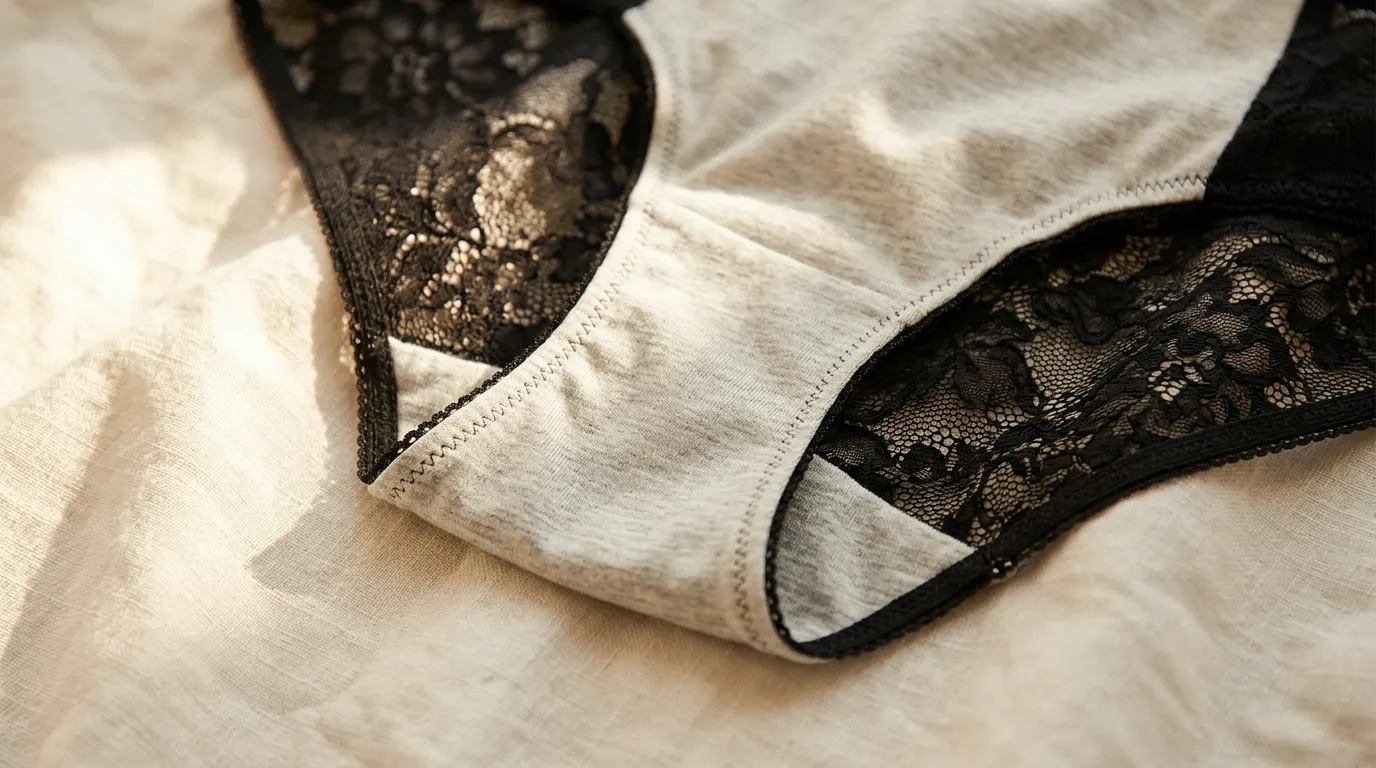
"100% cotton gusset" means the crotch panel is pure cotton — even when the rest uses synthetics. A gusset prevents chafing, absorbs moisture, and protects intimate health. Double-layer cotton gussets absorb 40% more than single-layer. Learn to test quality at home and why this small panel is your underwear's most important part.
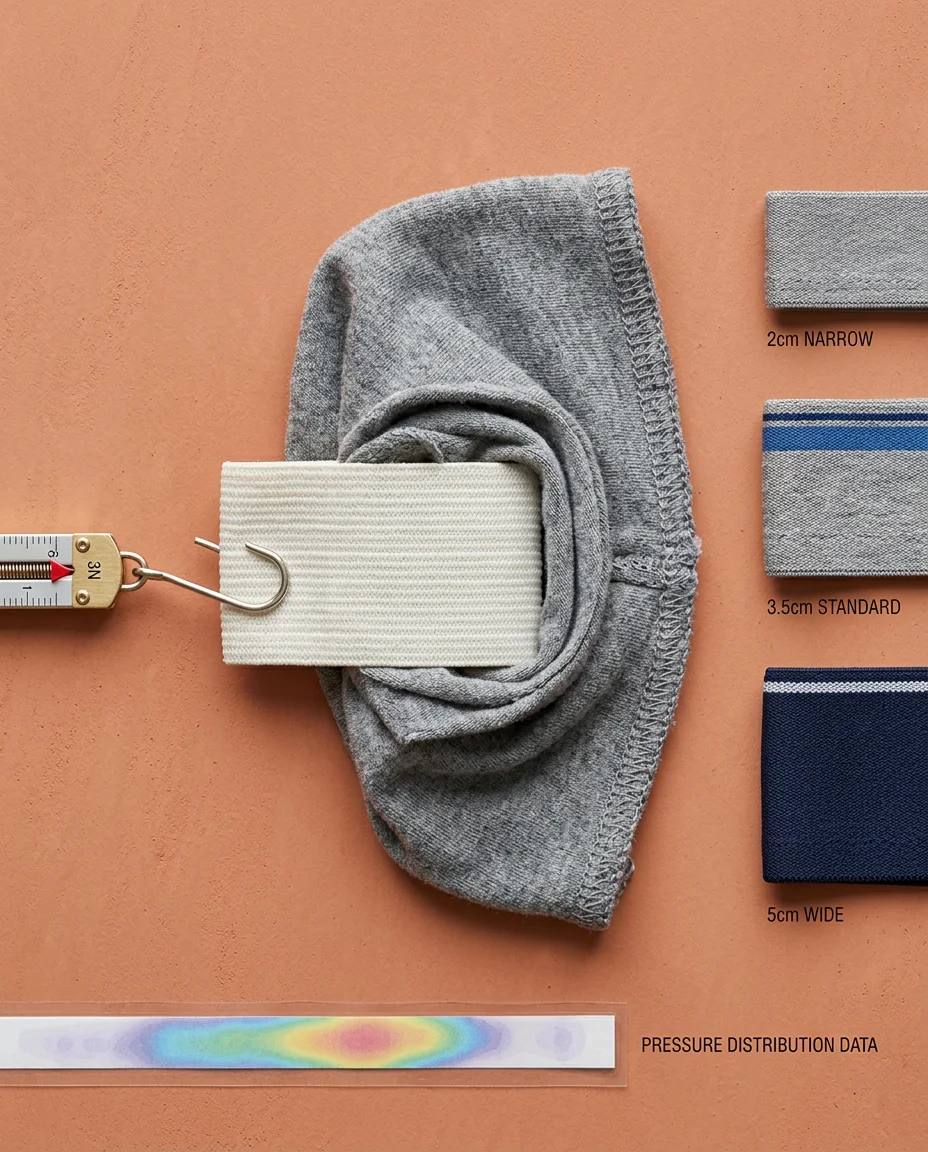
34 waistbands blind-tested over 103 days: 3–4cm double-layer elastic with 280+ denier spandex cuts 31% of waistband returns. Premium elastic keeps 95%+ recovery after 100 washes — budget degrades by wash 20. Exact specs for no-roll, no-dig underwear included.
In women's underwear, the most-discussed square centimeter of fabric is the gusset — our Gusset Science guide has tracked that panel's engineering for years. In men's underwear, the same battleground sits one panel forward: the pouch. It is where the category's premium brands (Saxx, Tommy John, Separatec) built their entire differentiation, where the comfort complaints concentrate, and — in most budget production runs — where factories quietly save money by downgrading the construction.
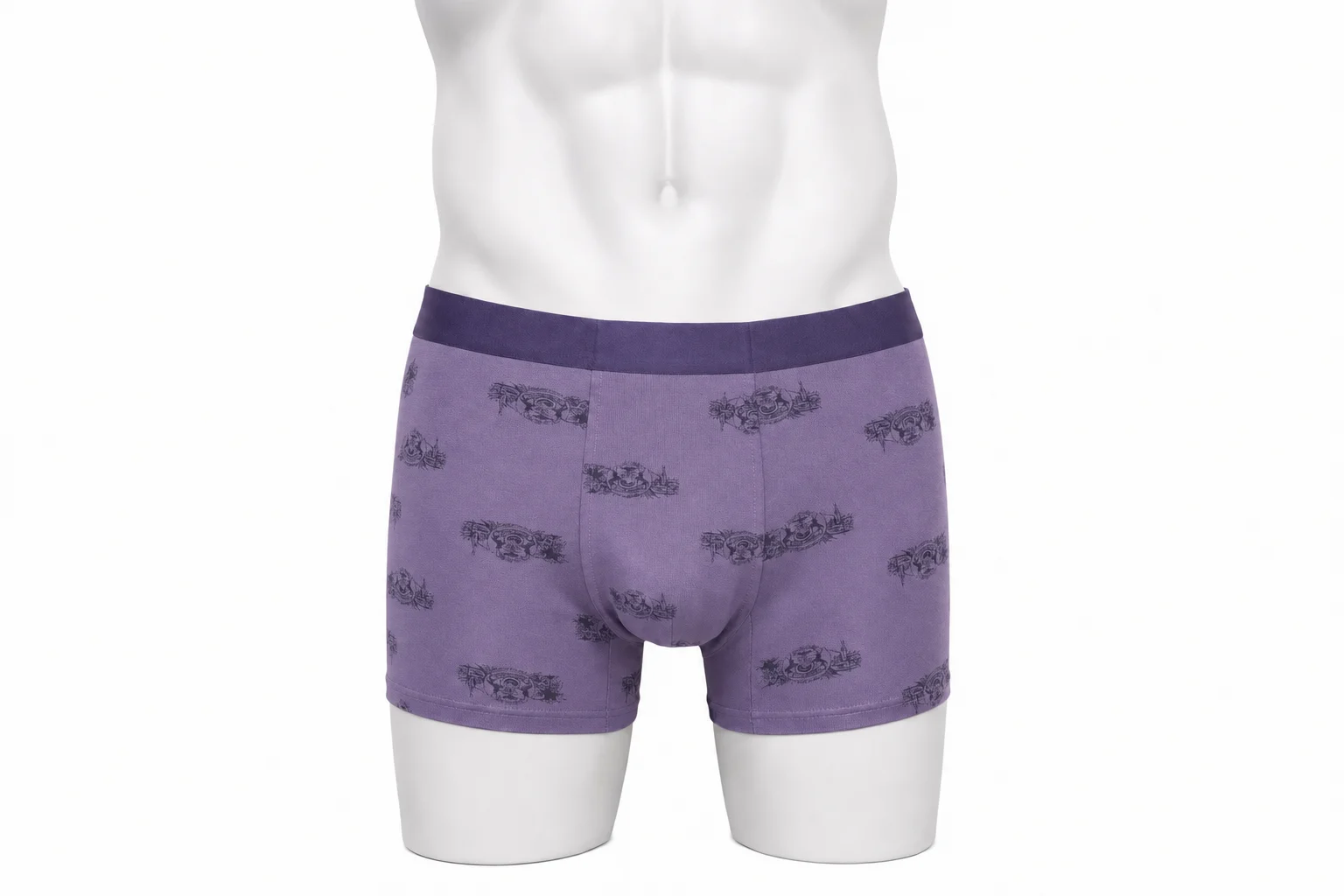
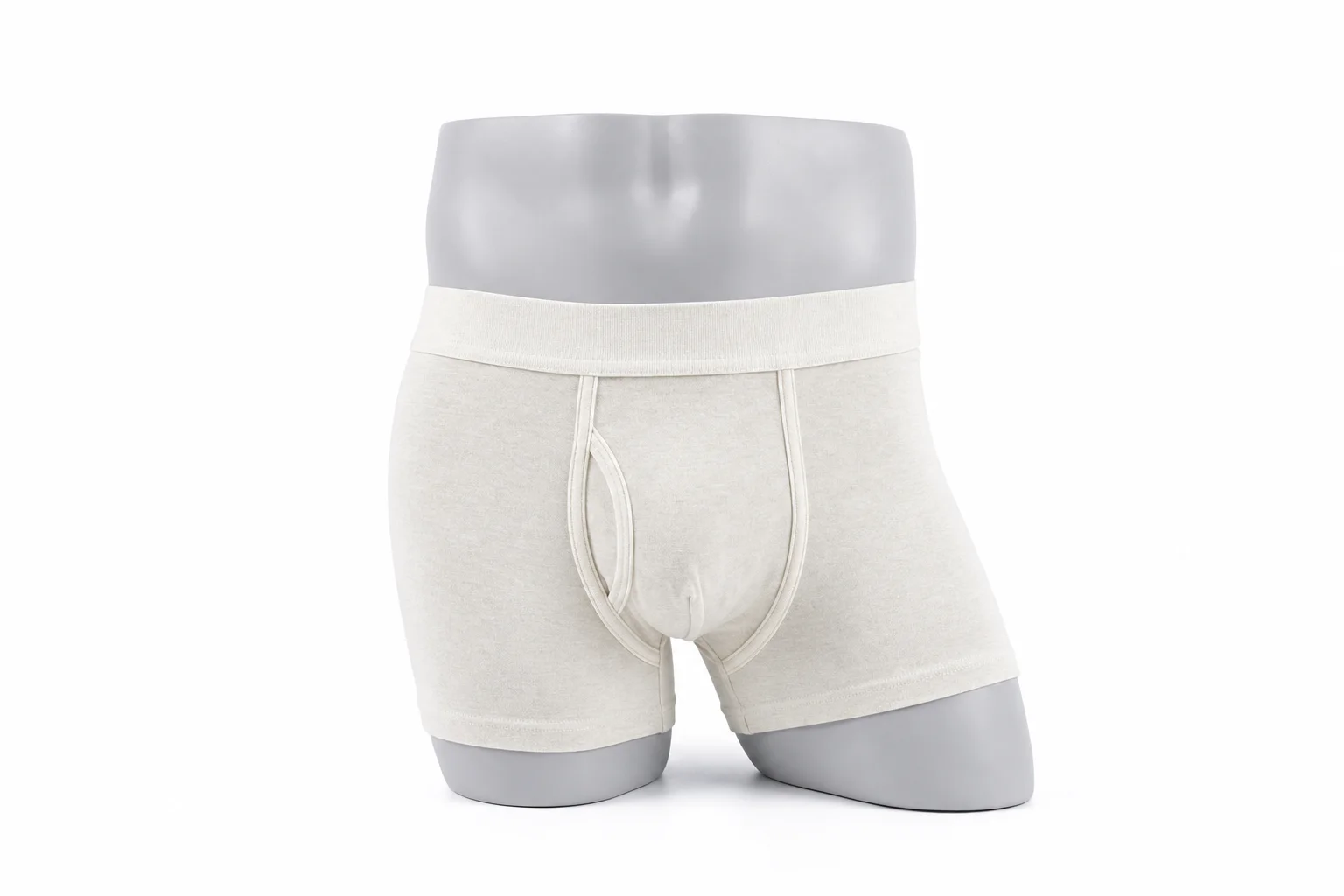
Pouch construction is measurable, gradable engineering — not a marketing silhouette. A true 3D pouch drops perceived heat 1–1.5°C versus a flat panel with identical fabric; a misaligned front arc is a spec violation (China's T/CTCA 8-2020 requires the men's front-center arc "centered, no offset or distortion" — 前中拱位在前幅正中位置,不可偏移歪扭). If your supplier cannot name their front construction, diagram it, and hold its tolerances, you are buying a photo, not a garment.
This guide maps the five front-end architectures, what each costs to make, what each measurably changes, and how to lock the spec in a tech pack.
The pouch zone runs 1–2°C hotter than surrounding skin — limited airflow, concentrated heat. A flat panel presses fabric against skin with zero convective gap; a 3D molded pouch holds an air channel open between them. In our production wear trials, flat-to-3D alone moved perceived heat down 1–1.5°C with identical fabric. That is why pouch choice belongs in the hot-climate spec conversation alongside cooling fabric selection — the two multiply, not substitute.
The center seam is the men's chafe complaint #1: a fixed ridge of stitching under a moving body. Removing contact (2D curves, 3D mold, dual chambers) removes the mechanism. Pouch shaping also interacts with ride-up: a properly shaped front reduces the fabric migration that pulls legs upward — the leg-side mechanics are covered in Why Boxer Briefs Ride Up.
Structure replaces tension. A flat panel "supports" by compressing with fabric stretch; a molded pouch supports by shape. That is the entire comfort logic premium brands charge $30+ for — and it is a pattern change, not a fabric upgrade.
The pouch zone often deserves — and in better garments gets — a different knit than the body:
Rule: if the panel fiber differs from the body by enough to matter to a label, it differs enough to matter to your spec.
China's seamless underwear group standard T/CTCA 8-2020 writes the men's front-end acceptance rules explicitly:
For buyers, this converts "the pouch looks off" from an aesthetic argument into a spec conversation. A dual pouch with a 1.5 cm left-right asymmetry is not a quirky sample — it fails a written tolerance.
Construction diagram: panel count, seam positions, fly or no-fly, divider (if dual).
Pouch zone fabric spec — separate from body fabric, with fiber content disclosed for the label.
Tolerances: front-center length ±0.8 cm; front arc centered, no offset/distortion; left-right symmetry per the T/CTCA 8-2020 table.
Fit validation: 8-hour wear test on the target market's fit model, checking contact pressure, chafe points, and heat.
Explore the men's series or send us your front-construction spec and target market for a quote.
Related reading: The Gusset Science (the women's-side counterpart) · Why Boxer Briefs Ride Up (leg hem + pattern mechanics) · Men's Cooling Boxer Briefs: Q-max Guide (pouch × fabric cooling math) · How Much Silk Is in "Silk" Underwear? (panel-level labeling) · Seamless Underwear Manufacturing Costs & MOQ.
Sources: China Textile Commerce Association group standard T/CTCA 8-2020 《无痕内裤》 — men's front-center arc centering requirement (前中拱位在前幅正中位置,不可偏移歪扭), finished-garment tolerance tables (front-center length ±0.8 cm, front-crotch width ±0.5 cm), left-right symmetry limits, leg-opening and waistband stretch floors (≥1.5×), quoted from the indexed full text; pouch-zone temperature differential, flat-to-3D perceived heat reduction (1–1.5°C), and construction cost positioning from XiaoTex factory cost accounting 2025-2026 (absolute pricing quoted per project — it depends on fabric and style); women's-gusset counterpart science cross-referenced from The Gusset Science; silk-blend panel labeling per T/CTCA 30—2026 mulberry-silk knit benchmarks as documented in our silk labeling guide. Tolerances cited are the standard's conforming-grade values; premium grades tighten them.