Fabric Science2026-09-0811 min read
Why Boxer Briefs Ride Up: Leg Hem Elastic, Fabric Recovery, and Pattern Fixes — An OEM Spec Guide
Paul PengFactory Technology Director
Part of the The Anatomy of a Panty series
Part of the The Anatomy of a Panty series
Understanding panty construction, patterns, and design principles
Ready-to-ship product series related to this article
Services and solutions for your business

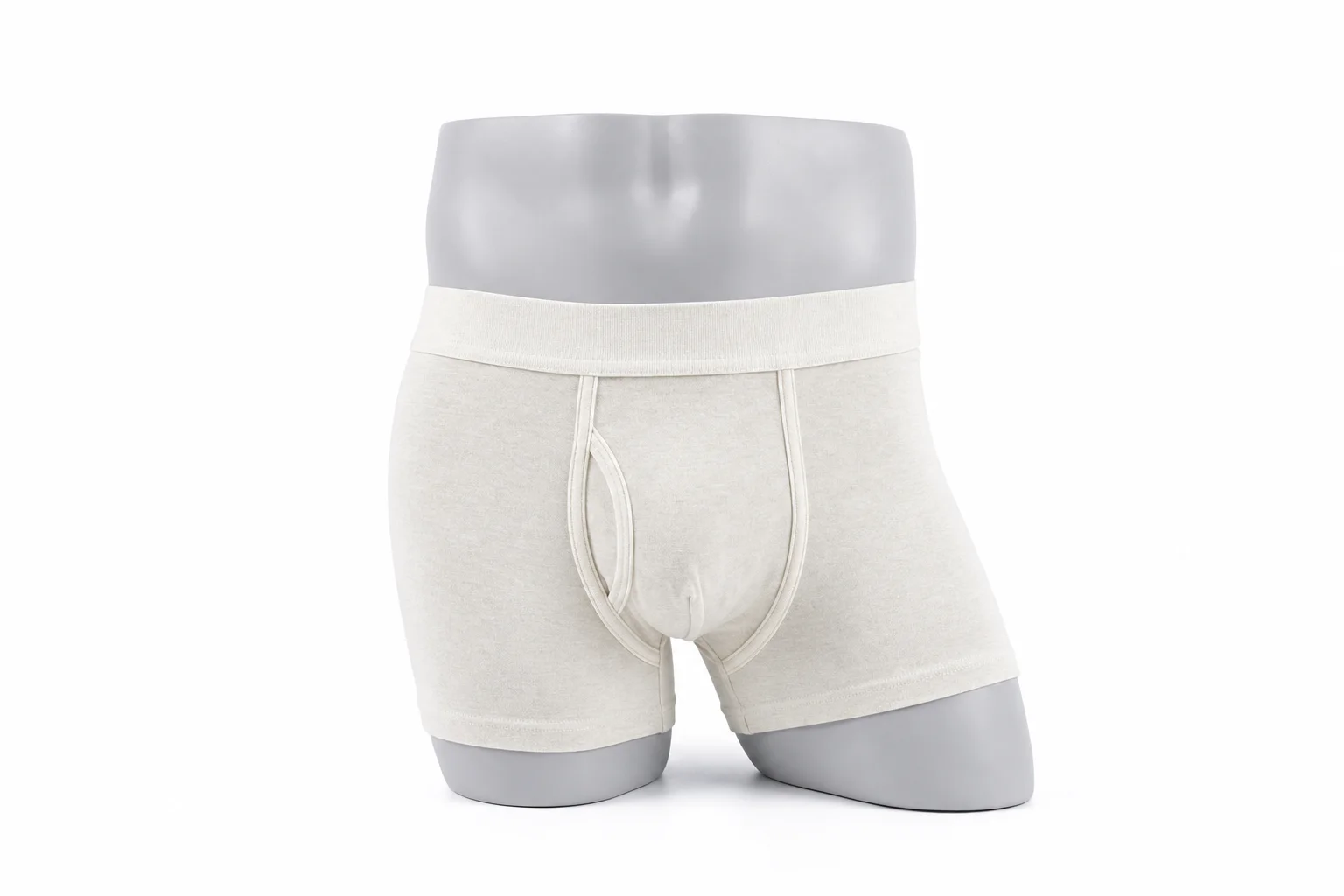
The pouch is where men's underwear brands actually differentiate — and where most of them quietly cheap out. This construction guide maps the five front-end architectures in boxer briefs (flat center seam, no-fly panel, contoured 2D, 3D molded pouch, dual pouch), the pattern and sewing cost behind each, the measurable comfort effects (a 3D pouch reduces perceived heat 1–1.5°C without changing fabric), and the tolerance rules — China's seamless-underwear standard T/CTCA 8-2020 requires the men's front-center arc centered and undistorted with ±0.8 cm on front-center length — that separate a premium pouch from a sewing defect.
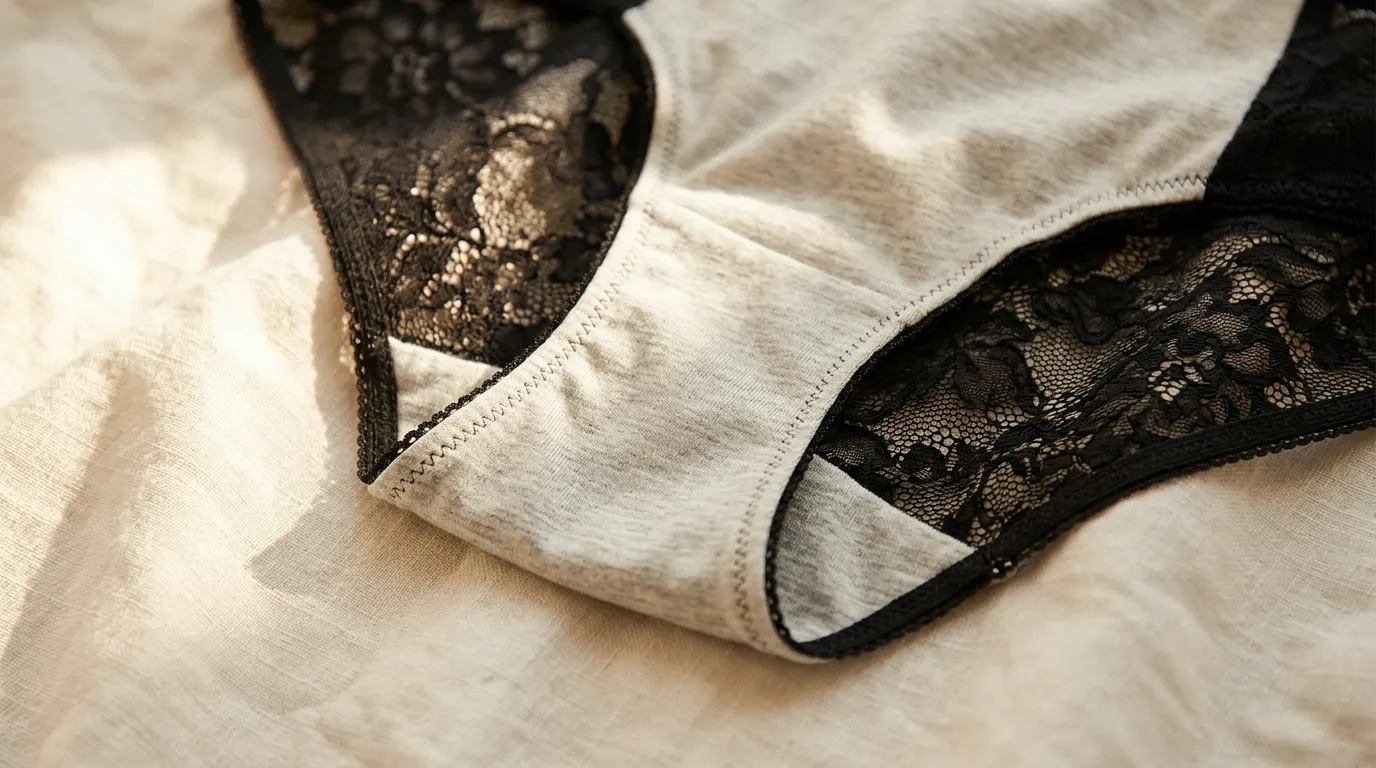
"100% cotton gusset" means the crotch panel is pure cotton — even when the rest uses synthetics. A gusset prevents chafing, absorbs moisture, and protects intimate health. Double-layer cotton gussets absorb 40% more than single-layer. Learn to test quality at home and why this small panel is your underwear's most important part.
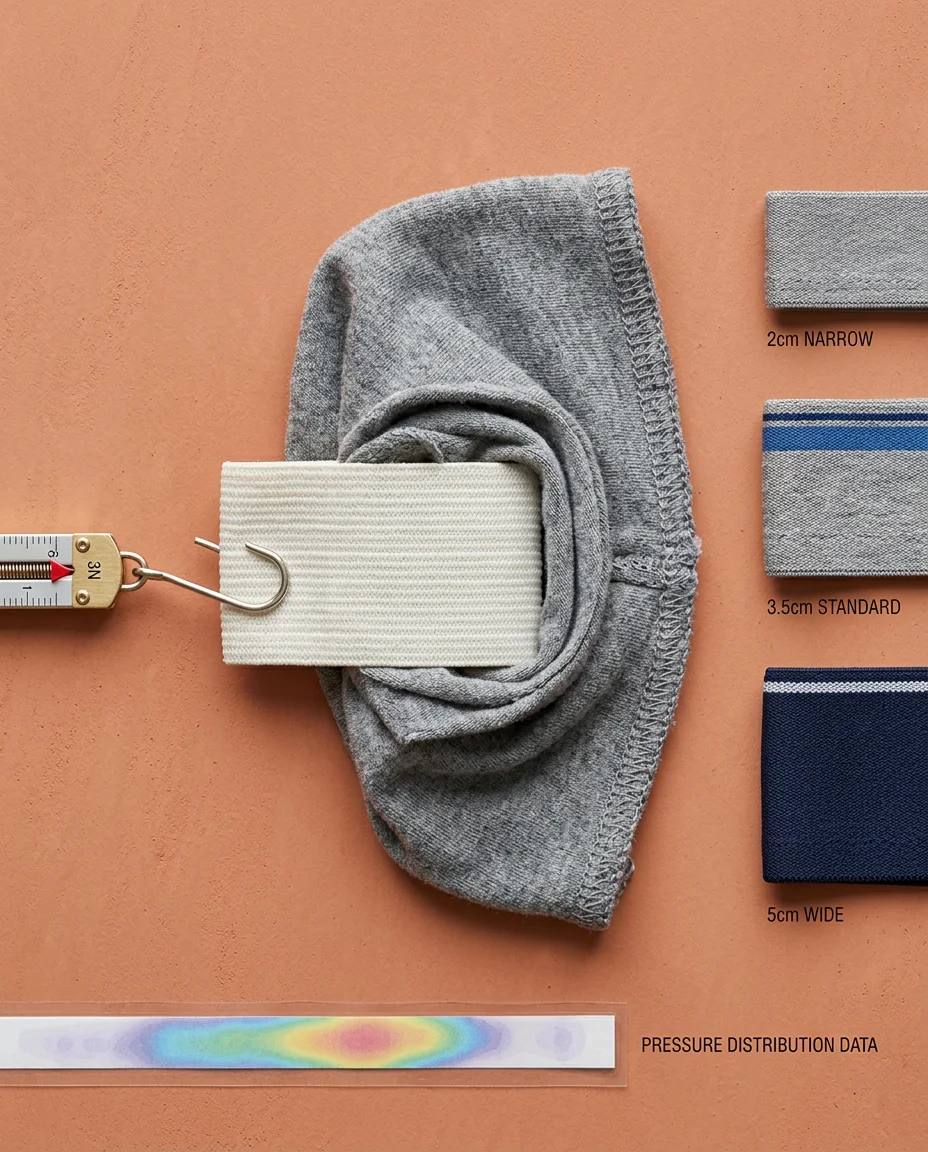
34 waistbands blind-tested over 103 days: 3–4cm double-layer elastic with 280+ denier spandex cuts 31% of waistband returns. Premium elastic keeps 95%+ recovery after 100 washes — budget degrades by wash 20. Exact specs for no-roll, no-dig underwear included.
The most-return-triggering complaint in men's underwear is also the most misdiagnosed one. When boxer briefs ride up, the wearer blames the size. The retailer blames the wearer's body. The brand blames the fabric. And in the overwhelming majority of cases, all three are wrong — the ride-up was engineered into the garment before it was ever sewn.
Ride-up is not primarily a size problem. A correctly engineered boxer brief in the right size does not ride up at 9 a.m. and ride up differently at 6 p.m. If a style rides up consistently across a size run, the leg-opening-to-thigh ratio in the pattern, the leg hem elastic spec, or the fabric's growth after washing is out of tolerance. Those are tech pack numbers, and they are fixable at the factory.
This guide is written for the people who can actually fix it: brands, private label buyers, and sourcing managers who sign off on boxer brief tech packs. Our companion piece — Why Does My Underwear Ride Up, Roll Down & Bunch? — covers the wearer-side view (body types, styling choices). Here we go one level down: the four construction root causes, the standard-backed numbers that belong in your specification sheet, and the acceptance protocol to run before you pay for bulk.
A boxer brief leg opening has one job: hold a circular grip on a moving cylinder (the thigh) for 12-16 hours, through sitting, standing, and walking. It fails when the opening is cut too wide relative to the wearer's thigh circumference — there is simply not enough elastic tension to maintain contact.
The pattern math that matters:
The sizing trap for export brands: most China-sourced blocks are drafted on Asian fit references. Our own men's series pages carry an explicit Asian sizing note for this reason. For US, European, and Australian markets — where average thigh circumference runs larger — a straight size-for-size adaptation of an Asian block concentrates ride-up complaints in exactly the sizes that sell the most (L-2XL). If your best market is the US or Australia, ask your factory for the block's thigh circumference per size, not just waist, and check the grade rules between them.
A leg hem can be perfectly cut and still fail in month two. Covered elastic loses recovery tension with every wash cycle — heat, detergent, and chlorine attack the spandex filament core, and the elastic gradually returns less and less of its stretch.
China's group standard for seamless panties, T/CTCA 8-2020, encodes the two numbers that separate a hem that holds from a hem that quits:
For boxer briefs, our factory benchmark works like this:
"95% cotton + 5% spandex" tells you the fiber ticket, not the hem's life expectancy. Recovery depends on the elastic's construction (covered rubber vs. spandex bare elastane), its width, the covering yarn, and the finishing heat it survived. Two garments with identical fiber tickets can have wildly different hem recovery. Specify the performance (recovery rate, stretch floor, wash cycles survived), and let the factory engineer the elastic that meets it.
The third failure mode is not the hem at all. The knitted body itself stretches permanently — fabric growth — and the grown body drags the hem away from the thigh.
This is why wash dimensional change limits belong in every boxer brief spec. China's group standard for soft-type underwear, T/CTCA 12—2022, grades it explicitly:
(The standard tests dimensional change per GB/T 8630 using the GB/T 8629-2017 washing program; pilling must reach grade 3 or higher, and burst strength at least 250 N for fabrics at 200 g/m² and up — 180 N under that weight. The same standard governs the soft-type underwear category your factory most likely quotes against.)
The boxer-brief-specific interaction is directional: lengthwise shrinkage pulls the leg hem upward from the crotch side while the elastic pulls down — a tug-of-war the hem eventually loses, especially in lighter 40-count modal bodies that trade weight for softness. If you are buying lightweight modal boxer briefs, dimensional change is not fine print; it is the difference between a reorder and a returns spiral.
The remaining ride-ups trace to the pattern block itself:
These are cheap to fix in development and expensive to fix after first delivery — which is the entire argument for sample-stage verification instead of trusting a factory's house block sight unseen.
Pull these checks into your pre-production approval, on samples from the actual bulk fabric lot:
Stretch each leg opening to 1.5× relaxed circumference, 20 cycles, then measure. Permanent growth over 5% fails — the hem will not grip by mid-season.
Run 30 home-wash cycles (GB/T 8629-2017 standard program or your market's equivalent). Re-measure: leg opening circumference, body dimensional change (limits in the table above), and visual elastic twist or wave.
Retest elastic recovery per HG/T 5070-2016 on washed samples. A hem that passed new but fails washed is the single most common ride-up return cause we see in buyer claims data.
One fit model per target market size, 8-hour wear, note ride-up frequency. If your market is the US, Australia, or Europe, fit on those body references — not the factory's default.
XiaoTex is an OEM/ODM underwear factory in Zhongshan, Guangdong. Men's boxer briefs are one of our four stocked programs, and fit-engineering complaints like ride-up are exactly what our tech pack review is built to catch:
If ride-up returns are eating your men's line — or you are planning one — explore our men's underwear manufacturing programs or send us your target market, size run, and construction spec for a quote.
Related reading: Why Does My Underwear Ride Up, Roll Down & Bunch? The Fit Science Fix (wearer-side companion) · Ergonomic Waistband Tension: The Hidden Comfort Variable · The Gusset Science: Why One Panel Decides Underwear Comfort · How to Start an Underwear Brand: OEM vs ODM Guide.
Sources: China Textile Commerce Association group standard T/CTCA 8-2020 《无痕内裤》 (Seamless panties) — leg opening and waistband stretch floor (≥1.5× relaxed size), elastic recovery test method per HG/T 5070-2016, adhesive film requirements, quoted from the indexed full text; China Textile Commerce Association group standard T/CTCA 12—2022 《柔软型内衣》 (Soft-type underwear) — dimensional change grade limits, pilling and burst strength requirements, test methods per GB/T 8630 / GB/T 8629-2017; elastic recovery degradation thresholds (under 70% tension retention as ride-up threshold, above 80% as brand-grade) cross-referenced with our earlier fit-science testing write-ups across 30+ brands; fit and returns observations from XiaoTex buyer claims data and factory tech pack review, 2025-2026. Performance claims reflect the cited standards' thresholds; actual results vary by elastic construction, fabric lot, and laundering conditions.