Industry Trends2026-04-0313 min read
Men's Underwear Market Shift: Why Boxer Briefs Won and Briefs Lost (2005-2026 Data)
Paul PengFactory Technology Director
Part of the Manufacturing Solutions series
Part of the Manufacturing Solutions series
Business insights for apparel brand owners, from production strategies to manufacturing optimization
Ready-to-ship product series related to this article
Services and solutions for your business
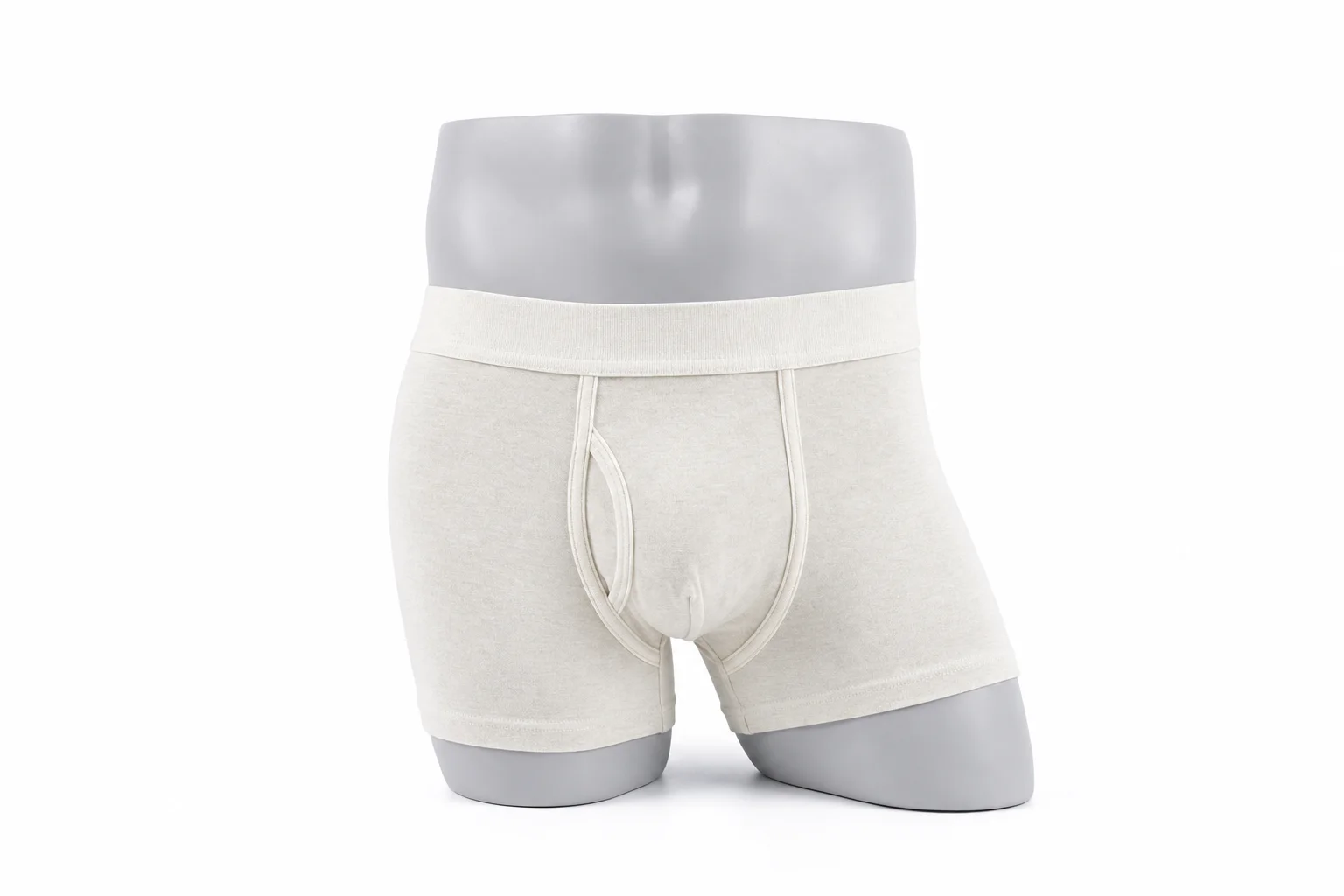
Ready-stock boxer briefs with your label from 100 pieces (7-day dispatch). Full OEM/ODM custom manufacturing from 500 pieces — while the industry asks 2,000+.
Learn MoreStart your underwear brand without the risk. Ready stock from 100 pieces, private label from 100 pieces. No large commitments required.
Learn More
Buyers read MOQ as a quality signal — '100 pieces must mean a garage operation; 5,000 pieces must mean a serious factory.' Both inferences are wrong. MOQ is regional production economics, not craftsmanship: Vietnam's full-package giants state 5,000-10,000 pieces per style (Thygesen's published rate), Bangladesh export lines run 1,000-5,000, and the wider industry asks 2,000+ — while China's Pearl River Delta clusters hold ready-stock fabric and mixed small-batch lines that make 100-piece private label ($1.00-1.50/piece) and 500-piece-per-color OEM ($1.50-3.00/piece) commercially real. This guide breaks down the line economics behind each number, what 'low MOQ' actually costs you in trade-offs, and the 100 → 500 test-and-scale ladder for underwear brands.

'Which country is best for apparel manufacturing?' costs brands money every time it gets asked — because the answer is a function of three variables, not one: your order stage, your category, and your destination market. Change any one and the correct country flips. This framework walks the three stages (100-piece private-label tests, 500-piece-per-color OEM scaling, 2,000+/10,000+ mass replenishment), maps categories to countries (underwear and fit-driven knits vs. cotton basics vs. performance synthetics), prices in the 2025 tariff reality (US-bound: 20% Vietnam / 20% Bangladesh / ≈45-55% China; RCEP markets: 0% on Chinese origin), and shows why 80%+ of US fashion companies now run dual-country sourcing instead of picking one winner.
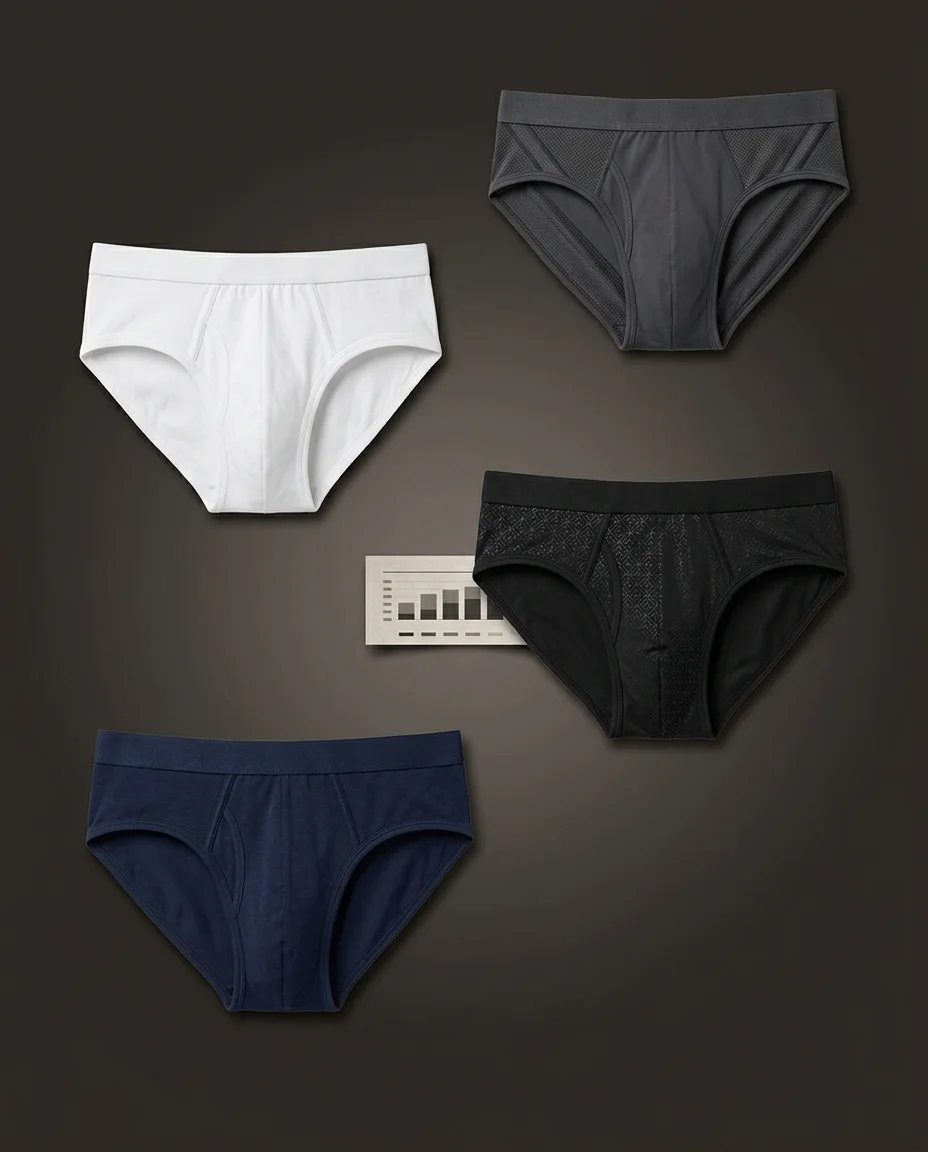
The men's underwear market split from one 'basics' category into four function-specific tracks — and the biggest entry filter is no longer design skill, it's MOQ arithmetic. This decision guide compares the four tracks (budget basics, functional tech, premium fabric, performance sport) with 2026 search data, per-track technology requirements and entry costs — and shows how a two-step sourcing ladder (test at 100 pieces ready-stock private label, scale at 500 pieces full OEM/ODM, vs the industry's 2,000+ norm) changes which track a new brand can actually afford to enter.
Between 2005 and 2010, a quiet revolution reshaped the men's underwear industry. Young men collectively abandoned briefs (三角裤) in favor of boxer briefs (平角裤/四角裤) — and they never went back. Street interview data from the Chinese market shows that most men aged 18-35 in 2026 have worn boxer briefs exclusively since middle school, a span of over 15 years. We analyzed a 34-brand blind test spanning 103 days with 10 testers, factory-to-retail pricing structures across three markets, and consumer behavior data to document this shift and what it means for brands entering the space.
Men's underwear design has undergone several paradigm shifts over the past century, each driven by broader social and cultural changes:
Consumer interviews reveal three consistent reasons for the briefs rejection: (1) "Chafes the inner thighs when moving actively," (2) "Feels socially awkward — briefs carry an outdated perception," and (3) "Boxer briefs provide more space and a more relaxed feeling." The shift was generational, not gradual — young men who grew up with boxer briefs simply never adopted briefs.
The most comprehensive consumer blind test we have analyzed evaluated 34 underwear brands over 103 days with 10 independent testers. Testers did not know brand identities during evaluation — they scored purely on wear experience.
Source: 34 brands, 103 days, 10 testers, blind evaluation. Six of ten testers named Yi Zhi Yu Modal as their overall favorite. Notably, the top 3 positions are all Modal fabrics — reinforcing Modal's dominance in consumer preference.
Modal products swept the top 3 positions. Testers consistently described the experience as "the underwear I would repurchase forever." Modal's 50% finer fiber diameter compared to cotton translates to measurably superior comfort in blind testing. This is consistent with international data showing SilkCut Micro Modal maintaining like-new condition after 10 years of wear.
An annual expert review of 8 major brands provides a qualitative complement to the blind test:
The data challenges the assumption that higher price guarantees better quality. CK and Hugo Boss, priced at $15-25/piece, scored worse than brands costing $2-5/piece.
Understanding the markup structure reveals where value is created — and where it is extracted:
The 5-7× markup in the mid-range DTC tier represents the sweet spot for new brands. Factory-direct pricing of $0.40-0.70/piece allows a DTC brand to sell at $3-5/piece with healthy margins while offering consumers a dramatically better value proposition than premium brands charging $15-25 for inferior cotton products.
Perhaps the most striking finding from long-term testing: Hengyuanxiang at $1.70/piece outperformed import brands over 7 months of daily wear.
| Test Metric | Import Brand | Hengyuanxiang ($1.70) |
|---|---|---|
| Waistband elasticity after 7 months | Loose after 2 months | No loosening |
| Fabric smoothness | Decathlon as benchmark | Thinner and softer than Decathlon |
| Sports quick-dry | — | Dry after basketball |
| Fabric wear | — | No thinning or holes |
This data point challenges the entire price-quality assumption in underwear. The lesson for brands: competitive advantage comes from fabric engineering and manufacturing quality, not from higher prices or luxury branding.
Understanding how men actually buy and use underwear provides actionable insights for product development and marketing:
"Most men are like me — even when dissatisfied, we keep wearing it and suffer in silence." This tolerance for poor quality means brands cannot rely on return rates as a quality signal.
Many men wear the same underwear for over two years. This extended replacement cycle means the durability benchmark is much higher than brands assume.
Men typically buy based on a single product image, rarely reading specifications or fiber composition. Clear visual communication of material benefits is critical.
Most men do not realize that sizing is inconsistent across brands. A "medium" in one brand may fit like a "small" in another. This drives returns and dissatisfaction.
Analysis across multiple consumer feedback channels identifies 8 recurring issues, ranked by frequency:
Each pain point represents a product differentiation opportunity. Brands that systematically address these 8 issues create a competitive moat that is difficult to replicate through marketing alone.
Based on the pain point analysis and market shift data, we identify five actionable design opportunities for brands entering or expanding in the men's underwear market:
The data is unambiguous: Modal dominates blind test rankings. Brands should default to Modal (92%) + Spandex (8%) for core product lines, reserving cotton for budget or seasonal warmth lines. The 50% finer fiber diameter creates measurable comfort advantages that translate directly to repurchase rates.
7A antibacterial (150-wash durability) is becoming table stakes for mid-range products. Brands that do not include antibacterial certification will increasingly be perceived as inferior, regardless of actual fabric quality.
Waistband elasticity failure is the #1 consumer complaint. Investing in cotton-covered elastic or woven elastic bands (rather than basic rubber) directly addresses the most frequent cause of product dissatisfaction.
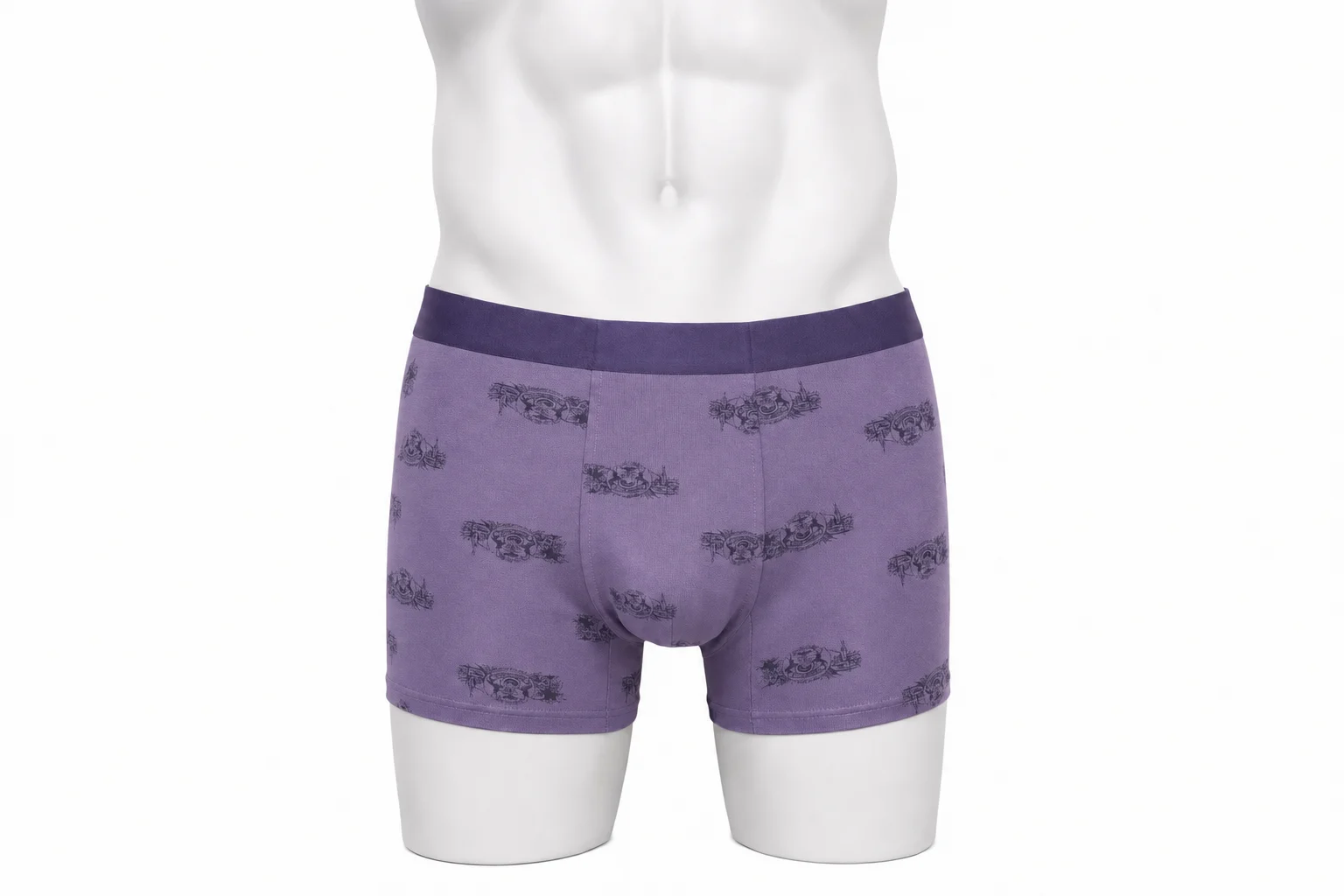
The briefs-to-boxer-briefs shift is permanent. New product lines should default to boxer brief cuts with 5-7 inch inseams. Brief-style products should be positioned as a niche offering, not the core line.
The daily cost metric ($0.02-0.08/day depending on product tier) is a powerful marketing tool that reframes the purchase from an expense to an investment. Brands that communicate value through daily cost rather than unit price will resonate with the next generation of value-conscious consumers.
The men's underwear market is one of the largest and most stable segments in apparel. Every male consumer is a repeat purchaser, replacement cycles are predictable, and brand loyalty (once established) is remarkably high. The modal-to-cotton transition currently underway represents a once-in-a-generation opportunity for new brands to capture market share from established players who are slow to adopt new materials.
The men's underwear market in 2026 is defined by three converging trends: the permanent shift from briefs to boxer briefs, the rising dominance of Modal over cotton, and the growing consumer sophistication that makes marketing-driven brands vulnerable to data-driven competitors.
The brands that will win are those that lead with verifiable material science (fiber diameter, antibacterial certification, daily cost analysis) rather than marketing labels. The data from 34-brand blind testing proves that quality and price are poorly correlated in this market — creating enormous opportunity for brands that can deliver genuine performance at honest prices.
For brands looking to enter or optimize their position in the men's underwear market, working with a manufacturing partner who understands these consumer behavior trends and can translate them into technical specifications — from Modal fiber certification to antibacterial grade selection to elastic engineering — is the difference between guessing and knowing.
Sources: This article references a 34-brand, 103-day consumer blind test with 10 independent testers, factory-direct pricing data from wholesale platforms, annual brand evaluation data from industry reviewers, consumer behavior surveys, and men's underwear design history (1919-2026). Material performance claims are based on textile engineering data for regenerated cellulose fibers and antibacterial testing standards (GB/T 20944, ISO 20743).