Panty Anatomy2026-03-088 min read
Ergonomic Waistband Tension: Eliminating 'Digging' Returns in Your Underwear Line
Karl XiaoFactory Production Director
Part of the The Anatomy of a Panty series
Part of the The Anatomy of a Panty series
Understanding panty construction, patterns, and design principles
Ready-to-ship product series related to this article
Services and solutions for your business

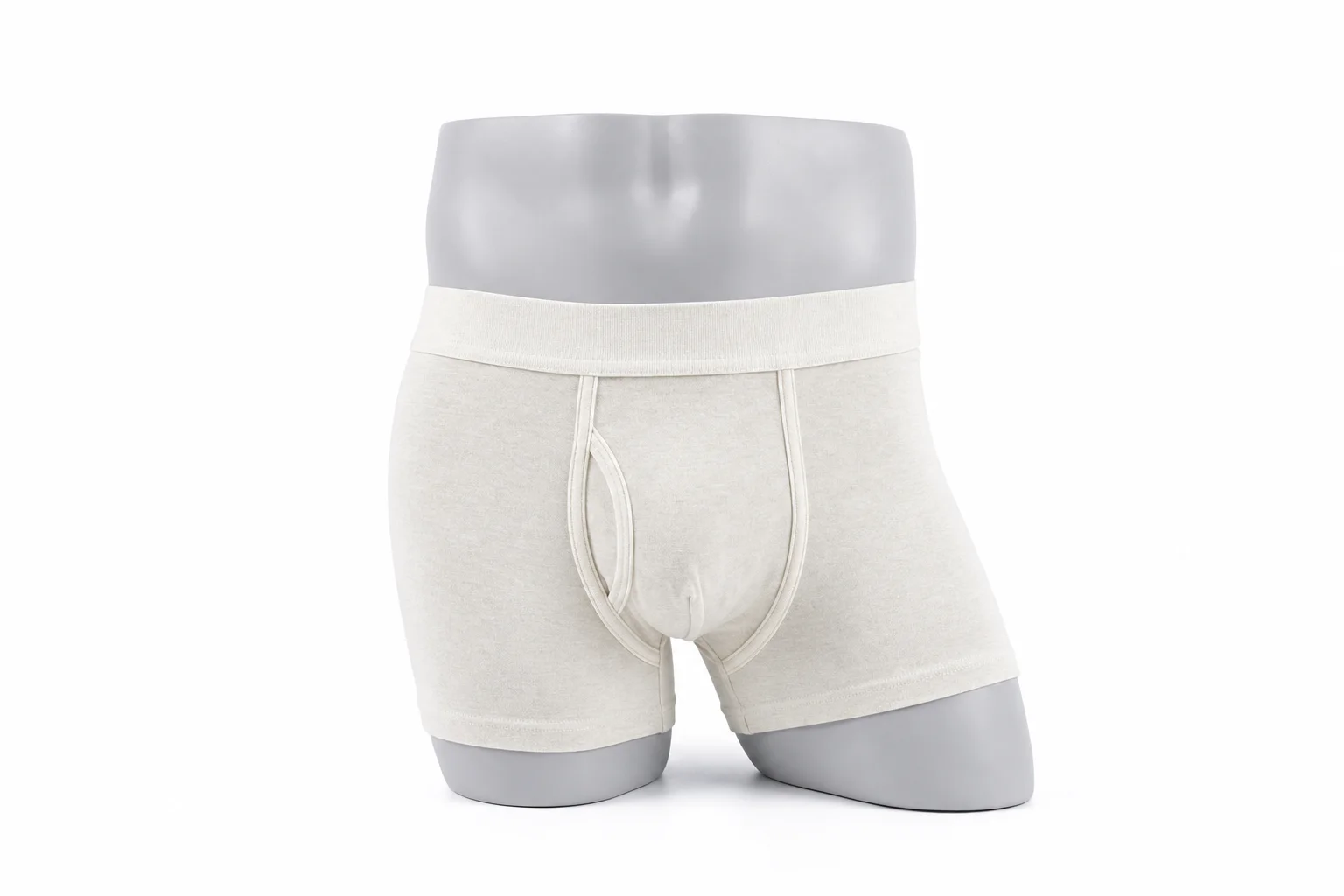
Boxer briefs ride up for four construction reasons that have nothing to do with the wearer's size: leg-opening geometry, elastic recovery loss, fabric growth after wash, and pattern mismatch. This guide breaks down each root cause with the numbers brands should put in a tech pack — the 1.5× leg-opening stretch floor from China's seamless underwear standard, elastic recovery testing per HG/T 5070-2016, and wash dimensional change limits per T/CTCA 12—2022 — plus a 30-wash acceptance protocol you can run before paying for bulk.

The pouch is where men's underwear brands actually differentiate — and where most of them quietly cheap out. This construction guide maps the five front-end architectures in boxer briefs (flat center seam, no-fly panel, contoured 2D, 3D molded pouch, dual pouch), the pattern and sewing cost behind each, the measurable comfort effects (a 3D pouch reduces perceived heat 1–1.5°C without changing fabric), and the tolerance rules — China's seamless-underwear standard T/CTCA 8-2020 requires the men's front-center arc centered and undistorted with ±0.8 cm on front-center length — that separate a premium pouch from a sewing defect.
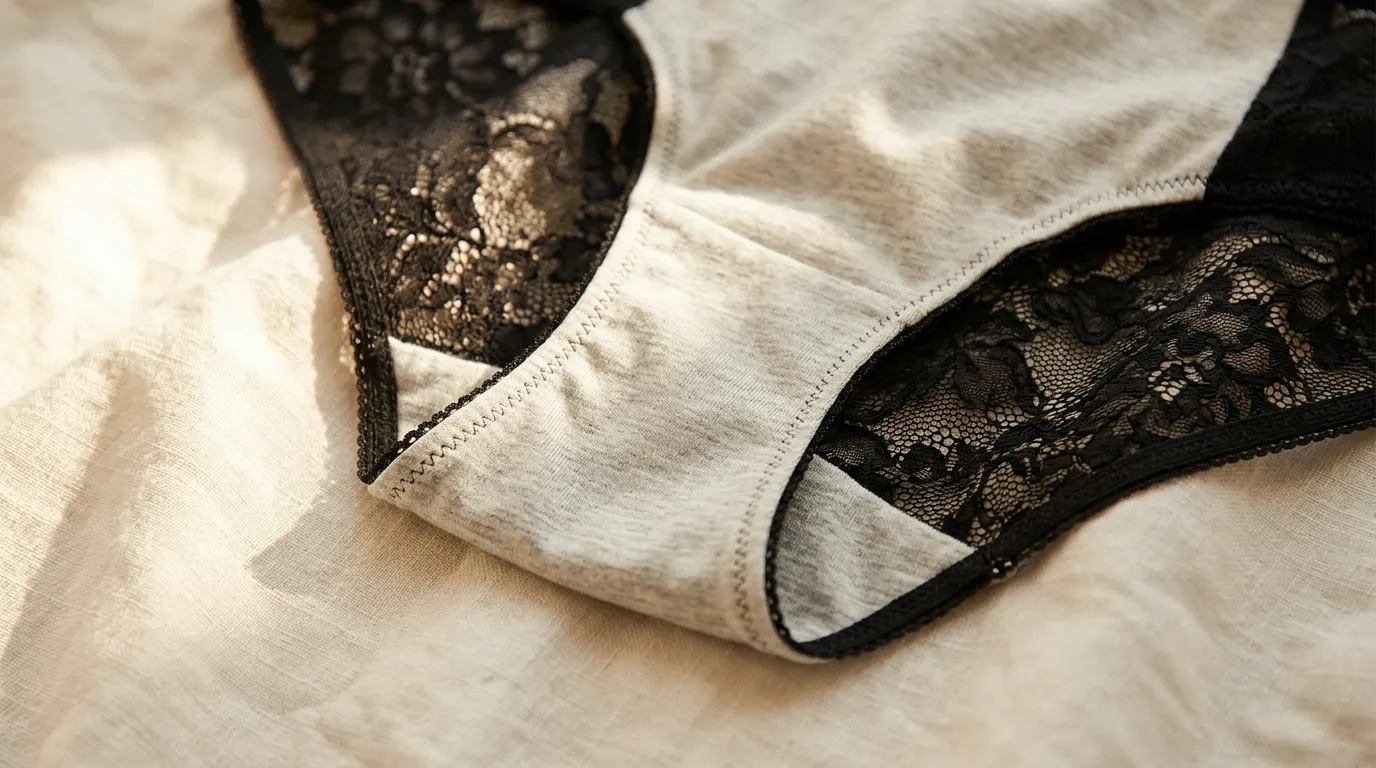
"100% cotton gusset" means the crotch panel is pure cotton — even when the rest uses synthetics. A gusset prevents chafing, absorbs moisture, and protects intimate health. Double-layer cotton gussets absorb 40% more than single-layer. Learn to test quality at home and why this small panel is your underwear's most important part.
Customers don't return underwear because it's too tight—they return it because it digs into their waist, causing red marks, discomfort, and pain. "Digging" is the third most common reason for underwear returns, right behind sizing and material quality.
As a brand owner, you need to understand that waistband tension engineering is what separates comfortable underwear from painful underwear. The right elastic, width, and tension distribution prevents digging while maintaining a secure fit.
For DTC underwear brands, the waistband isn't just a construction detail—it's a primary driver of returns, reviews, and customer loyalty.
For a deep dive into the science, read our original guide: Ergonomic Tension: The Secret to No-Roll Waistbands
The key principles:
When sourcing waistbands, the elastic quality and construction method determine whether your product digs or comforts. Budget, mid-tier, and premium brands approach waistbands very differently—and customers notice immediately.
Construction: Fabric folded over, elastic stitched inside Width: 2-3cm Pressure Distribution: Poor (narrow, concentrated) Durability: Elastic separates after 20-30 washes Customer Perception: "Cheap," "digs into waist" Return Rate: 6-9% for digging issues
Construction: Elastic attached to fabric, edge overlocked Width: 3-4cm Pressure Distribution: Good (wider, more even) Durability: Elastic maintains tension for 50+ washes Customer Perception: "Comfortable," "secure fit" Return Rate: 2-3% for digging issues
Construction: Elastic fully enclosed, ultrasonic bonding or no-show stitching Width: 4-5cm Pressure Distribution: Excellent (wide, ultra-even) Durability: Elastic maintains tension for 100+ washes Customer Perception: "Luxury," "can't feel it" Return Rate: <1% for digging issues
The lesson: Investing $0.10 more per meter in premium elastic generates $42,000 more value per 1000 units through reduced returns and higher satisfaction.
One of the biggest challenges for waistband design is maintaining consistent comfort from XS to 4XL. A waistband that's comfortable on a Medium may dig painfully on a 3XL if tension isn't graded properly.
When waistband tension isn't graded by size:
Business impact:
Professional factories use tension grading to ensure consistent comfort across sizes:
Factory Capability Question: "Do you use different elastic tension for plus-size waistbands?" If they say "we just make it wider"—that's insufficient.
When creating your tech pack, the waistband section must specify tension, not just dimensions. Poor waistband specifications = digging returns.
Construction:
Elastic Specifications:
Size-Specific Tension (Critical for Plus-Size):
Performance Standards:
When evaluating samples or factory capabilities, watch for:
Warning Signs of Waistband Quality Issues:
Understanding how factories construct waistbands helps you avoid digging disasters and returns.
Timeline: 1 week
Always request a tension test report for elastic samples. Many factories buy "elastic" without knowing the actual tension specifications. Premium elastic specifies tension in grams (e.g., "900g ±10%"), while budget elastic has "medium tension" with no specifications. Uncertain tension = uncertain comfort.
Timeline: 1 week
Timeline: 1 week
Timeline: 2-4 weeks (depending on quantity)
When communicating with factories about waistbands, use these industry terms:
Don't assume waistbands are comfortable. Verify with these tests:
Tension Test:
Recovery Test:
Comfort Test:
Use this framework when deciding on waistband quality for your line:
Budget Line ($8-12 retail):
Mid-Tier Line ($15-25 retail):
Premium Line ($30+ retail):
Reality: Using the same elastic tension for all sizes causes discomfort in both small and large sizes.
Solution: Require tension grading—specify different tension for each size (XS-4XL) in your tech pack.
Reality: Making waistbands wider without adjusting tension doesn't solve digging—it just adds bulk.
Solution: Focus on tension grading first, then adjust width for comfort and aesthetics.
Reality: Factories test size M, ship production, and plus-size customers experience painful digging.
Solution: Always request PP samples in multiple sizes including XL+, require real wear testing.
Reality: Rubber elastic costs $0.07 less per meter but loses tension after 20 washes, causing returns.
Solution: Specify "premium spandex elastic only" and require tension specifications in grams.
For DTC underwear brands, waistband comfort is the primary driver of plus-size customer retention. Get it wrong and you lose 40-50% of your plus-size market. Get it right and you build loyal plus-size advocates.
When you get it right:
When you get it wrong:
The math is clear: Investing $0.10 more per meter in premium elastic with tension grading generates $42,000 more value per 1000 units through reduced returns and higher plus-size CLV.
Don't let poor waistband design alienate your plus-size customers. Whether you're launching a new line or fixing waistband issues in an existing one, understanding tension grading and elastic quality is critical to reducing returns and building size-inclusive loyalty.
Get Expert Guidance:
Contact Us to Get Your Waistband Specification Guide
Sources: This B2B guide is based on textile engineering research on pressure distribution and comfort, elastic fiber technical specifications from leading spandex producers, industry return rate analysis from DTC underwear brands, and manufacturing cost analysis from China supply chain partners.